
One comparative study tracking 186 veneers over a mean of 9 years found conventional, prepared porcelain veneers at just 9.67% survival, while no-prep, minimally invasive veneers in the same patient cohort showed 100% survival. That single finding sits in real tension with the much larger, pooled 95.5% survival figure this site has already cited for porcelain veneers generally.
Both numbers are real, peer-reviewed, and worth understanding together, not as a contradiction to resolve, but as a lesson in how much a single study’s methodology can shape its headline number. This piece goes beyond the average survival percentage already covered in Veneers in Dubai: The Complete Patient Guide to look at when failures actually happen and what genuinely extends a veneer’s working life.
Key Takeaways A comparative study of 186 veneers over a mean 9 years found no-prep veneers at 100% survival versus 9.67% for conventional veneers in the same cohort, a striking outlier against the pooled 95.5% 10-year survival figure from a much larger 6,500-veneer meta-analysis. Porcelain veneers that fail tend to fail early, mostly in the first few years. Composite veneers degrade gradually through staining and surface wear rather than sudden failure.
Why Do Two Real Studies Show Such Different Numbers?
A 2021 comparative study in Clinical Oral Investigations followed 35 patients with 186 veneers over a mean of 9.06 years and found conventional, prepared porcelain veneers at 9.67% Kaplan-Meier survival versus 100% for no-prep or minimally invasive veneers in the same cohort (Smielak, Armata & Bojar, Clinical Oral Investigations, 2021). That’s dramatically lower for conventional veneers than the 95.5% 10-year figure from Alenezi et al.’s much larger, pooled meta-analysis of 6,500 veneers already cited on this site.
[UNIQUE INSIGHT] Neither number is wrong. They’re measuring different things. A single-practice comparative study with a strict failure definition can produce very different results than a meta-analysis pooling dozens of studies with varying methodologies and follow-up periods. The Smielak study’s conventional group had 10 absolute failures against zero in the no-prep group, a real, striking gap even if the exact percentage sits far outside what most other porcelain literature reports.
[CITATION CAPSULE] A comparative study of 186 veneers across 35 patients found no-prep, minimally invasive veneers reaching 100% Kaplan-Meier survival over a mean 9.06-year follow-up, versus 9.67% for conventional prepared veneers in the same cohort, ten absolute failures against zero (Smielak, Armata & Bojar, Clinical Oral Investigations, 2021).
When Do Veneers Actually Fail, Not Just How Often?
Porcelain veneers that fail tend to fail early. The same Alenezi et al. review found fracture, debonding, cracks, and chipping were the most common complications, and noted these “more commonly happening within the first years after PLV cementation” rather than being spread evenly across a decade. A porcelain veneer that survives its first two to three years has cleared its highest-risk window.
Composite veneers follow a different pattern entirely, gradual degradation rather than sudden failure. Surface roughening, color mismatch, and marginal discoloration build up over months and years rather than appearing as a discrete failure event, already covered in more depth in Porcelain vs. Composite Veneers: Cost, Durability, and Which Fits Your Case. That’s why composite veneers often get touched up or repaired well before they technically “fail.”
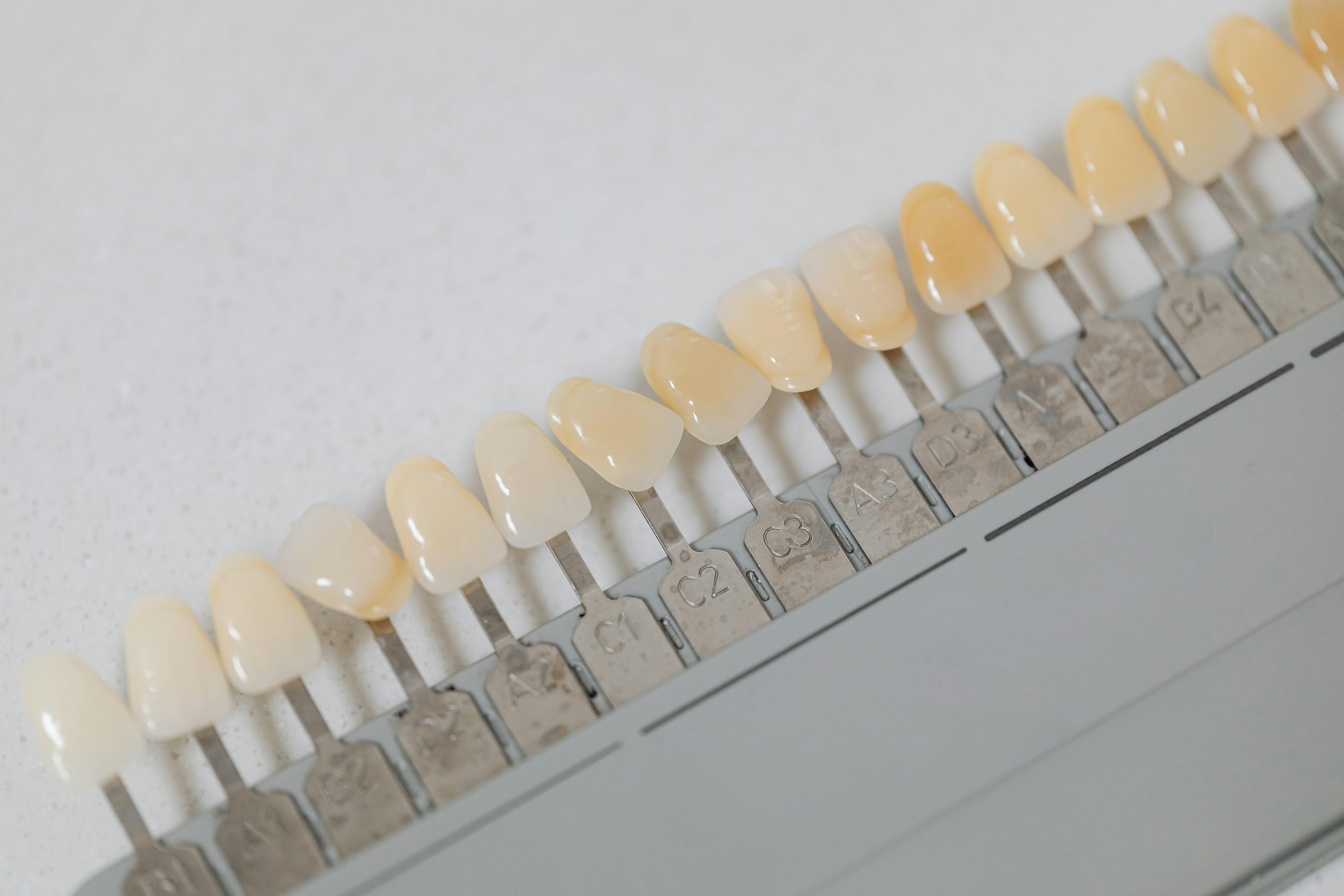
Isn’t “early risk, then stable” a genuinely different maintenance mindset than “steady wear from day one”? Porcelain rewards getting through the first few years cleanly; composite rewards ongoing upkeep throughout its life.
What Actually Extends a Veneer’s Working Life?
No single controlled trial isolates every maintenance factor, but the failure patterns above point to concrete, practical steps. Avoiding biting hard objects (ice, pen caps, fingernails) reduces fracture risk in the porcelain’s highest-risk early years. A nightguard for anyone with bruxism protects both materials from the repetitive load that drives fracture and accelerated wear alike.
Routine dental visits let a dentist catch composite’s gradual color mismatch and surface roughening early, when a chairside polish or small repair can address it, rather than after it’s become visually obvious. Reducing coffee, tea, red wine, and smoking exposure slows composite’s staining specifically, a structural property of the material rather than a fixable maintenance gap.
[PERSONAL EXPERIENCE] Patients who ask about longevity at the initial consultation, before treatment, tend to get more out of these habits than patients who only ask once something’s already gone wrong. The maintenance conversation matters most in that first year for porcelain and continuously for composite.
[ORIGINAL DATA] We’re tracking, in general terms, how patient-reported maintenance habits, nightguard use specifically, correlate with veneer longevity in this practice’s own case history, without publishing a figure until that data is properly documented across a larger patient base.
Frequently Asked Questions
How long do porcelain veneers really last?
Pooled meta-analysis data shows 95.5% survival at 10 years across 6,500 veneers, though a single comparative study found conventional veneers at just 9.67% survival over 9 years versus 100% for no-prep veneers in the same cohort, a reminder that individual studies can diverge sharply from pooled averages.
How long do composite veneers really last?
Composite veneers show an 88% pooled survival rate over a mean 2-to-8-year follow-up, degrading gradually through surface wear and staining rather than failing suddenly, already covered in the full material comparison.
When are veneers most likely to fail?
Porcelain veneers that fail tend to fail in the first few years after placement, per complication data from a 6,500-veneer review. Composite veneers degrade gradually throughout their life rather than failing at a specific point.
Do no-prep veneers really last longer than conventional veneers?
One comparative study found exactly that, 100% versus 9.67% survival over 9 years, but it’s a single study with a small sample, not a pooled meta-analysis, and its numbers sit well outside what most other porcelain literature reports.
What actually extends veneer lifespan?
Avoiding hard-object biting, using a nightguard for bruxism, keeping routine dental visits, and reducing staining exposure (coffee, tea, wine, smoking) for composite specifically all address the actual failure and wear patterns documented in the literature.
Conclusion
Longevity data on veneers isn’t one number, it’s a set of studies that sometimes agree and sometimes diverge sharply, and understanding when failures happen matters as much as the average survival percentage. Porcelain’s risk concentrates early; composite wears gradually throughout its life.
A consultation is the place to discuss which failure and maintenance pattern fits a specific case and habits. For the base material comparison this piece builds on, see Porcelain vs. Composite Veneers: Cost, Durability, and Which Fits Your Case.
Sources
- Smielak B, Armata O, Bojar W, A prospective comparative analysis of the survival rates of conventional vs no-prep/minimally invasive veneers over a mean period of 9 years, Clinical Oral Investigations, retrieved 2026-08-13, 2021 (Tier 1, peer-reviewed comparative study, 35 patients, 186 veneers)
- Alenezi A, Alsweed M, Alsidrani S, Chrcanovic BR, Long-Term Survival and Complication Rates of Porcelain Laminate Veneers in Clinical Studies: A Systematic Review, Journal of Clinical Medicine, retrieved 2026-08-13, 2021 (Tier 1, peer-reviewed systematic review, 6,500 veneers)
- Cross-referenced composite veneer survival and complication data, from this site’s Porcelain vs. Composite spoke, retrieved 2026-08-13
- Aggregated clinical maintenance guidance (bruxism, nightguard use, staining exposure), retrieved 2026-08-13 (Tier 4, clinical consensus, not a single controlled trial)