
A systematic review of 6,500 porcelain veneers found a 95.5% survival rate at 10 years. That figure gets quoted constantly in veneer marketing, but it applies to exactly one of the two materials patients are typically offered, and most pages never say which one.
“Veneers” gets sold as a single product with a single lifespan. It isn’t. Porcelain and composite resin are genuinely different decisions, with different survival data, different costs, and a reversibility gap that rarely gets mentioned at all. This guide covers what veneers actually are, the honest material comparison, real Dubai pricing, the full process, and how to know if you’re a candidate.
Key Takeaways Veneers are thin custom shells bonded to the front of teeth, available in porcelain or composite resin, and the material choice matters more than most marketing suggests. A systematic review of 6,500 porcelain veneers found 95.5% survival at 10 years, while composite veneers show a pooled 88% survival rate over a 2-8 year mean follow-up. Dubai pricing runs AED 800-4,500 per tooth depending on material, with a full smile makeover typically AED 8,000-40,000.
What Are Dental Veneers, and How Do They Work?
Veneers are thin, custom-made shells, made from porcelain or composite resin, bonded to the front surface of a tooth to change its shape, color, or alignment. They sit over the visible face of the tooth rather than replacing it, a fundamentally different approach than a crown, which covers the entire tooth.
Veneers treat cosmetic concerns well: chips, gaps, staining that whitening can’t fix, and minor alignment irregularities. They don’t substitute for orthodontics on significant misalignment, and they’re not a first step for active decay or unaddressed gum disease, both need treating before a veneer goes anywhere near the tooth.
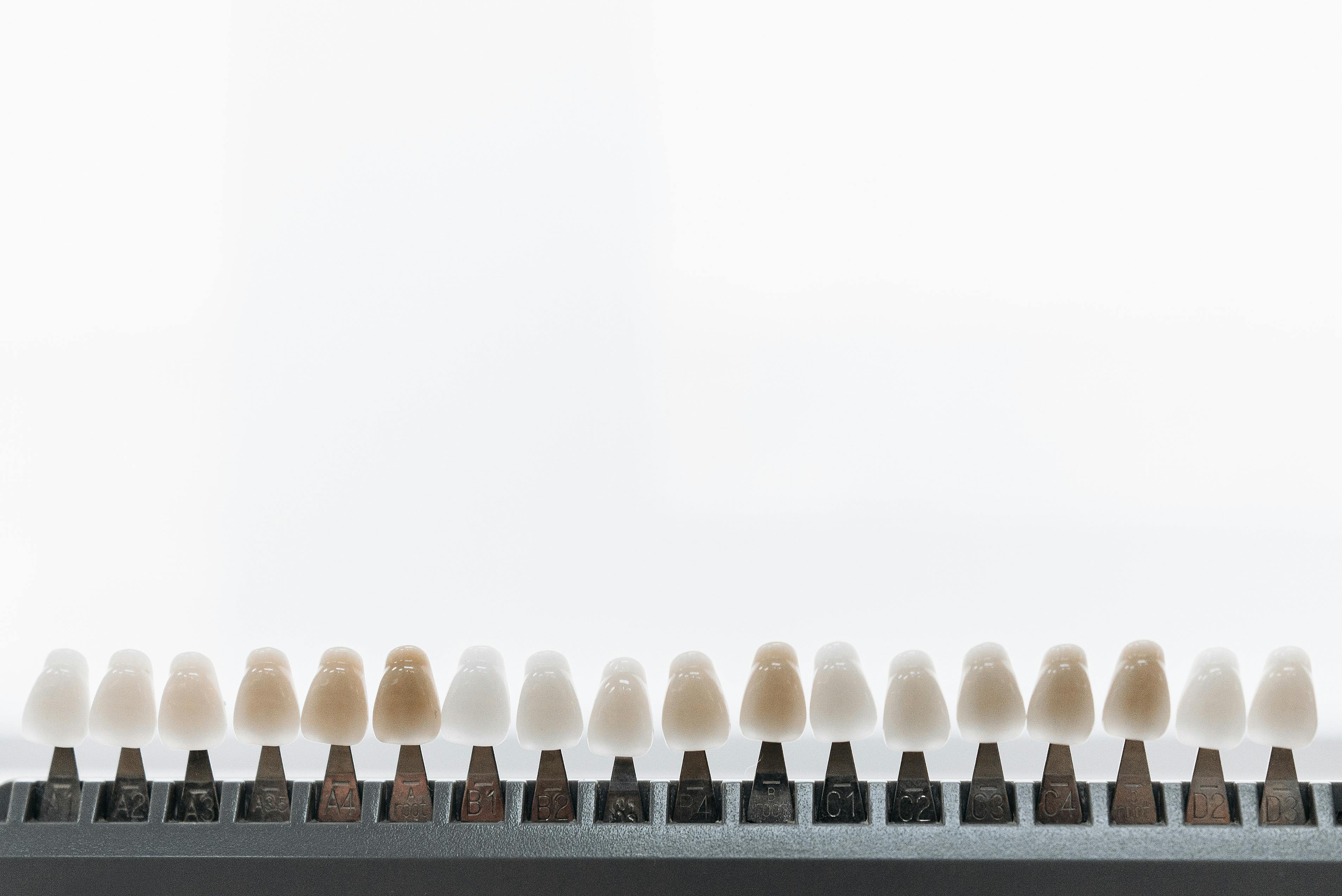
Isn’t it a little strange that “veneers” gets marketed as one product when a patient is actually choosing between two materials with meaningfully different properties? That choice is the real decision this guide exists to walk through.
Porcelain vs. Composite Veneers: What Does the Survival Data Actually Show?
In 2021, a systematic review and meta-analysis in the Journal of Clinical Medicine pooled 25 clinical studies covering 6,500 porcelain laminate veneers across 1,646 patients (Alenezi et al., Journal of Clinical Medicine, 2021) and found a 10-year cumulative survival rate of 95.5%. Composite veneers show a meaningfully different picture: a 2023 systematic review and meta-analysis found a pooled survival rate of 88% across studies with a mean follow-up of 24 to 97 months, roughly 2 to 8 years.
[CITATION CAPSULE] Porcelain veneers showed a 95.5% survival rate at 10 years across a pooled analysis of 6,500 veneers and 1,646 patients (Alenezi et al., Journal of Clinical Medicine, 2021). Composite veneers, by contrast, showed an 88% pooled survival rate over a mean follow-up of just 2 to 8 years, a materially shorter evidence window with a lower survival figure even at that shorter timeframe.
What actually fails, and when, differs by material too. Porcelain veneers most commonly fail from fracture, followed by debonding, cracks, and chipping, with most of these showing up in the first few years after cementation. Composite veneers more often show surface roughening, color mismatch, and marginal discoloration over time, wear-and-appearance issues rather than structural failure.
For the deeper material-science comparison, including why not all porcelain performs the same and what each material actually costs per year of use, see Porcelain vs. Composite Veneers: Cost, Durability, and Which Fits Your Case.
That’s why a blanket “veneers last 10 to 15 years” claim, common across cosmetic dentistry marketing, only tells the truth about one material. Porcelain genuinely supports that range. Composite, in the actual published data, typically doesn’t.
How Much Do Veneers Cost in Dubai?
Composite veneers in Dubai typically run AED 800 to 1,500 per tooth, porcelain veneers run AED 1,800 to 3,000 per tooth, and zirconia veneers, a premium ceramic option, run AED 2,500 to 4,500 per tooth. A full smile makeover covering 8 to 10 veneers typically costs AED 8,000 to 40,000 depending on material and case complexity (aggregated Dubai clinic pricing guides, 2026).
What drives the range within each tier? Lab quality, whether digital smile design is included in the fee, and clinic tier all matter, similar to the component-driven pricing structure already documented for single-tooth implants in Dubai. No single controlled pricing study exists for veneers specifically, these are aggregated, directional market-rate figures, not a fixed quote. For the full itemized breakdown of what’s actually in a veneer quote, see What Determines Veneer Cost in Dubai? A Component Breakdown.
For the general Dubai cost framework this scales from, including VAT treatment and how residency status affects pricing, see Dental Implant Cost in Dubai: 2026 Pricing Guide for Residents & Visitors, which covers the same underlying market even though implants and veneers are different procedures entirely.
What Does the Veneer Process Actually Involve?
The process starts with a consultation and a digital smile mockup, then diverges sharply by material. Porcelain requires enamel preparation, custom lab fabrication, and a temporary veneer while the permanent one is made, typically 2 to 3 visits over 1 to 2 weeks. Composite is usually sculpted directly onto the tooth by the dentist in a single visit, no lab, no temporary.
We’ve covered the digital mockup step itself in depth, including the 2023 randomized trial finding 92% “excellent” outcome ratings with digital planning versus 78% conventionally, in Digital Smile Design: See Your Implant Result Before Surgery. The workflow is identical whether it’s planning an implant crown or a veneer, so that piece isn’t worth re-explaining here.
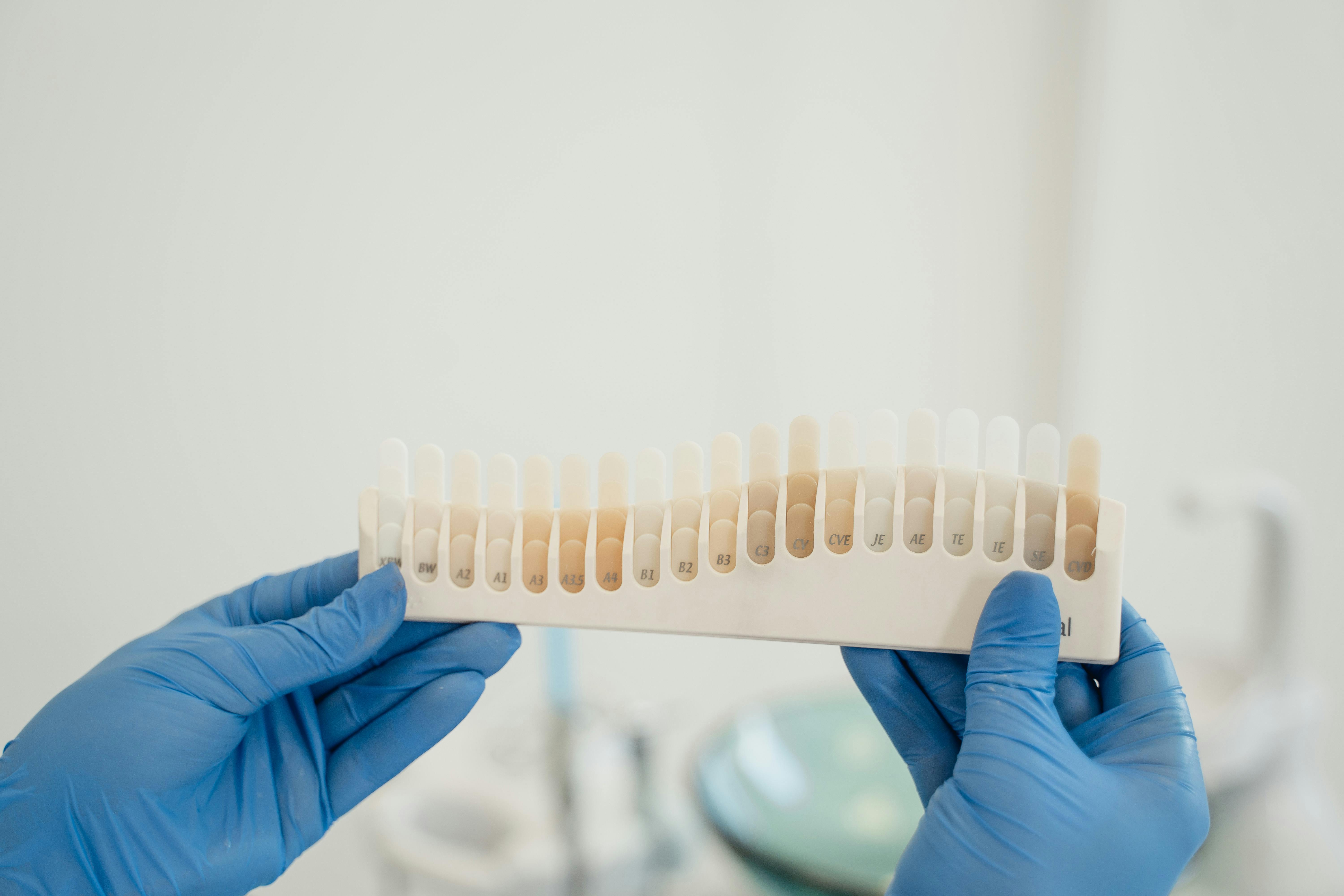
That visit-count gap isn’t a minor scheduling detail. It’s a direct trade-off against the survival data above: composite’s single-visit convenience trades against a shorter typical lifespan, porcelain’s multi-visit process buys the 10-year data that composite doesn’t have.
Are Veneers Reversible?
No, not for porcelain, and this is the trade-off most marketing pages skip entirely. Porcelain veneers require permanently removing a thin layer of enamel to make room for the shell, once that enamel is gone, the tooth needs some form of restoration indefinitely, veneer or otherwise. Composite veneers involve little to no enamel removal and are largely reversible or repairable chairside. For exactly how much enamel each veneer type removes, and what happens to the tooth if a veneer isn’t replaced, see Are Veneers Reversible? What Actually Happens to the Tooth Underneath.
[UNIQUE INSIGHT] This reversibility gap runs on a completely separate axis from the survival-rate comparison above. A patient could reasonably prioritize composite’s reversibility even knowing it has a shorter typical lifespan, or prioritize porcelain’s longevity while accepting the permanence. Neither is the “correct” choice; they’re different trade-offs entirely.
Are You a Good Candidate for Veneers?
Good candidates have healthy teeth and gums, adequate remaining enamel, and realistic expectations about scope, veneers change color, shape, and minor alignment, they don’t substitute for orthodontic treatment on significantly crowded or rotated teeth. Active decay or unaddressed gum disease needs treating first, not covered over.

Not every cosmetic concern needs a veneer, either. Simple discoloration without shape or alignment issues is often better served by whitening alone, a lower-cost, fully reversible option covered in more depth once that comparison is published on this site. Veneers are the right tool for a specific set of problems, not a default upgrade for anyone unhappy with their smile.
[PERSONAL EXPERIENCE] The porcelain-versus-composite conversation at consultation usually comes down to two questions: how much budget and time is available, and how comfortable the patient is with a permanent, irreversible step. Patients rarely arrive already knowing which trade-off matters more to them, and that’s a completely normal starting point.
Veneers vs. Other Cosmetic Options: A Quick Orientation
Veneers change the tooth’s actual visible surface. Teeth whitening only changes shade, it can’t alter shape, length, or gaps, and it’s fully reversible with no enamel removal at all, covered in full in Veneers vs. Teeth Whitening: Which Actually Fixes What You’re Seeing. Dental bonding applies composite resin more conservatively than a full veneer, often to fix a single chip or small gap rather than reshaping several teeth, covered in full in Veneers vs. Dental Bonding: The Faster, Cheaper Alternative Explained.
[ORIGINAL DATA] We’re tracking, in general terms, how patients weigh porcelain against composite once they understand both the survival data and the reversibility trade-off, without publishing a specific figure until that’s properly documented across a larger patient base.
Frequently Asked Questions
What are dental veneers?
Thin, custom-made shells, made from porcelain or composite resin, bonded to the front surface of a tooth to change its shape, color, or alignment without replacing the whole tooth.
How long do veneers last?
It depends heavily on material. Porcelain veneers showed 95.5% survival at 10 years in a systematic review of 6,500 veneers, while composite veneers showed an 88% pooled survival rate over a much shorter 2-to-8-year mean follow-up.
Are veneers reversible?
Porcelain veneers are not reversible, they require permanent enamel removal. Composite veneers involve little to no enamel removal and are largely reversible or repairable chairside.
How much do veneers cost in Dubai?
Composite runs AED 800-1,500 per tooth, porcelain AED 1,800-3,000 per tooth, and zirconia AED 2,500-4,500 per tooth, with a full 8-10 tooth smile makeover typically AED 8,000-40,000.
Am I a candidate for veneers?
Good candidates have healthy teeth and gums with adequate enamel and realistic expectations about scope. Active decay or gum disease needs treating first, and significant misalignment usually needs orthodontics instead.
What’s the difference between porcelain and composite veneers?
Porcelain costs more, requires enamel removal and multiple visits, and shows stronger 10-year survival data. Composite costs less, is largely reversible, and can often be completed in one visit, but with a shorter typical lifespan.
Conclusion
Veneers isn’t one decision, it’s a material choice with genuinely different longevity, cost, and reversibility trade-offs, not a single number that applies to both options equally. Porcelain’s 95.5% survival at 10 years and composite’s 88% pooled survival over a much shorter window tell two different stories, and knowing which one applies to a specific quote matters more than the word “veneers” alone.
A consultation and digital smile mockup is the way to see the actual result on your own face before committing to either material. For the broader orientation on how this practice approaches cosmetic and restorative treatment planning generally, see Dental Implants Explained: The Complete Patient Guide.
Continue Learning
Gum Health & Maintenance:
- Can You Get Veneers With Gum Disease? What Needs to Happen First
- How Often Should You See a Dentist If You Have Implants or Veneers?
- The Real Maintenance Routine for Implants, Veneers, and Whitening Combined
- What Actually Damages Dental Work: Habits That Shorten Implant and Veneer Lifespan
Planning Around an Event:
Teeth Whitening:
- Teeth Whitening in Dubai: The Complete Patient Guide
- Do Teeth Whitening Strips Work? Trials vs. Dentist-Made Trays
- Does Whitening Toothpaste Work? What It Can’t Change
- Teeth Whitening Cost in Dubai: In-Office vs. At-Home Pricing
- Is Teeth Whitening Safe? Sensitivity, Enamel, and Who Should Wait
- Laser vs. Zoom vs. Tray Whitening: Does the Light Actually Help?
- How Long Does Teeth Whitening Last? What Actually Keeps It Bright
Case Study:
Sources
- Alenezi A, Alsweed M, Alsidrani S, Chrcanovic BR, Long-Term Survival and Complication Rates of Porcelain Laminate Veneers in Clinical Studies: A Systematic Review, Journal of Clinical Medicine, retrieved 2026-08-03, 2021 (Tier 1, peer-reviewed systematic review, 25 studies, 6,500 veneers, 1,646 patients)
- Survival and Complication Rates of Resin Composite Laminate Veneers: A Systematic Review and Meta-Analysis, retrieved 2026-08-03, 2023 (Tier 1, peer-reviewed systematic review, 7 studies, mean follow-up 24-97 months)
- Aggregated Dubai clinic pricing guides for dental veneers, retrieved 2026-08-03, 2026 (Tier 4, directional market-rate figures, not a single controlled source)
- Cross-referenced digital smile design outcome data (92% vs. 78% “excellent” rating), from this site’s Digital Smile Design spoke, PMC11001014, 2023