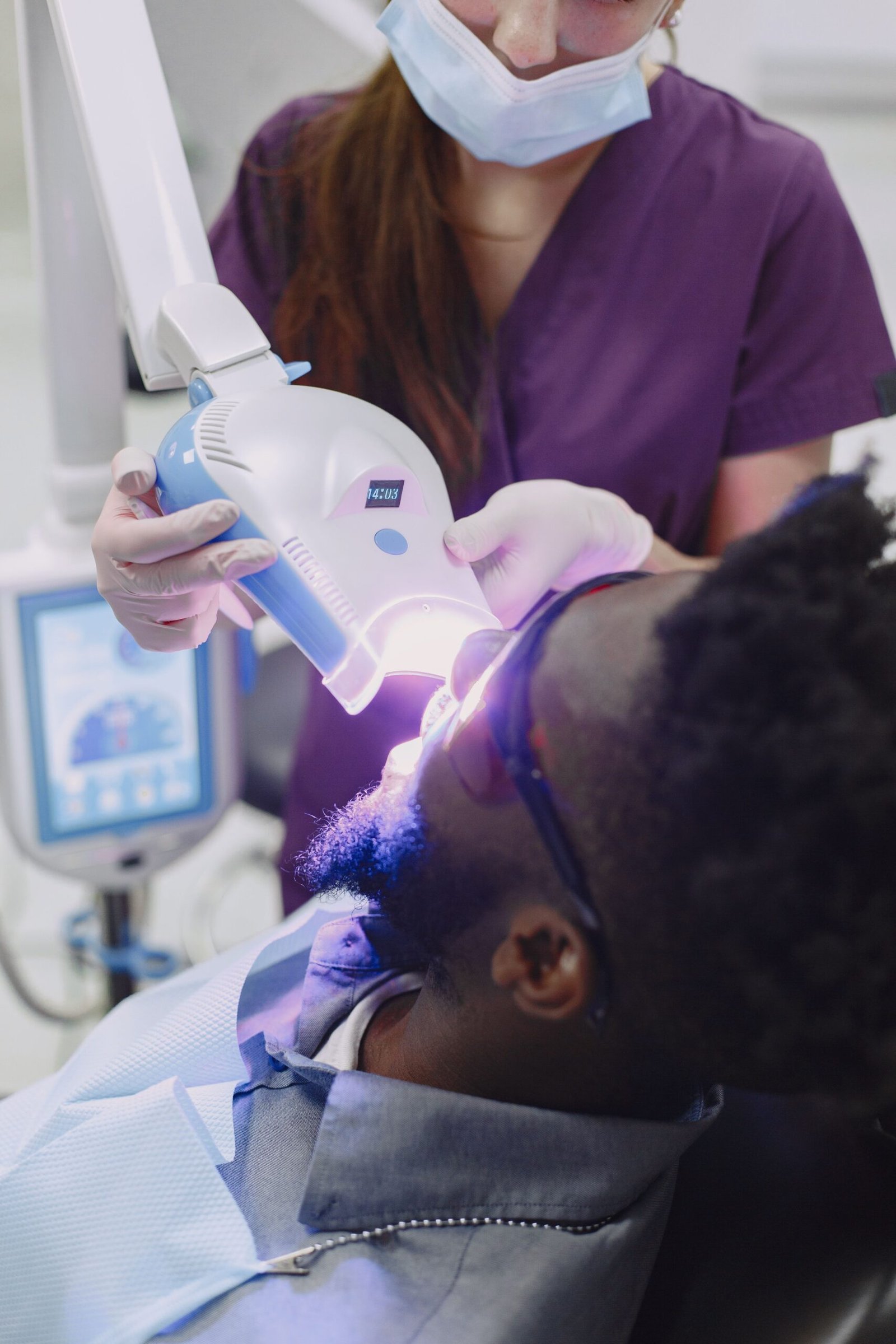
In 2026, an umbrella review of 10 systematic reviews, covering 91 unique primary studies, concluded that laser or light activation did not improve final whitening in in-office bleaching (Allende et al., Journal of Esthetic and Restorative Dentistry, 2026). The light is the most visible part of a premium whitening session: the lamp, the branded system name, the blue glow. The evidence says it isn’t doing much of the work.
That’s an awkward finding for a market that prices “laser” and “Zoom” above plain in-office gel. This guide separates what the light is claimed to do from what trials measured, what it does to sensitivity, the one light-based technique that does have supporting evidence, and how the three routes actually differ.
Key Takeaways A 2026 umbrella review of 10 systematic reviews found laser or light activation did not improve final whitening, and a 2012 meta-analysis found no difference with 25-35% peroxide. Light didn’t reduce sensitivity, and one meta-analysis found 3.5-times higher odds with it. Tray and in-office routes reached about 3 shade units in a 130-patient trial. The real differences are time, price, and durability.
Does Light or Laser Activation Make Whitening Work Better?
Not in the pooled clinical evidence. The 2026 umbrella review’s meta-analysis of six randomized trials (136 participants) found no significant difference in final shade change with laser activation, a mean difference of -2.2 shade-guide units with a 95% confidence interval of -6.4 to 1.9 (Allende et al., Journal of Esthetic and Restorative Dentistry, 2026). Any short-term edge wasn’t maintained at 3 to 6 months.
Read the interval carefully. It spans both a sizeable benefit and a sizeable disadvantage, and heterogeneity between trials was very high (I² of 97%). So the accurate summary is “no demonstrated advantage,” not “proven to add nothing.” The review’s own quality ratings add a caution too: of the 10 included reviews, two were rated moderate confidence, three low, and five critically low.
An older meta-analysis adds a useful nuance about gel strength. In 2012, a review pooling 11 studies found that with 15 to 20% hydrogen peroxide, light-activated systems gave better immediate bleaching. With 25 to 35% hydrogen peroxide, the strengths common in-office systems use today, there was no significant difference in immediate or short-term bleaching (He et al., Journal of Dentistry, 2012).
[UNIQUE INSIGHT] Put those two findings together and the light looks like a tool built for a problem that largely went away. When weaker gels needed help, light-activation helped. Once in-office gels reached 25 to 35%, the same lamp had nothing measurable left to add. Clinics still use it, and patients still ask for it by name, but the whitening is coming from the peroxide.
[CITATION CAPSULE] A 2026 umbrella review of 10 systematic reviews and 91 primary studies concluded that laser or light activation did not improve final whitening efficacy in in-office bleaching. A pooled analysis of six randomized trials showed no significant difference in shade change, and the authors rated the certainty of that evidence as low (Allende et al., Journal of Esthetic and Restorative Dentistry, 2026).
What Do Zoom and Laser Systems Claim?
The manufacturer of the best-known light-activated system states that its lamp roughly doubles color change: about 8 units with the lamp against about 4 with 25% gel alone, and up to 87% more stain removal in 45 minutes (Philips, Zoom WhiteSpeed product page, 2026). Those are the manufacturer’s own claims, and the page footnotes them as a lab study measured in Delta E, with “actual results may vary.”
Three things are worth noticing. The footnoted studies are lab studies, not trials in patients. The page gives no sample size for either claim. And Delta E, a lab color-difference measure, isn’t the same scale as the shade-guide steps a clinician records, so “8 units” cannot be read as “8 shades.” The same page reports that 99% of surveyed patients had little or no sensitivity, a survey of 135 people in the US in 2013 with no comparison group.
That doesn’t mean the claims are false. It means they haven’t been shown in the clinical trials that reviewers pooled, which found no meaningful added whitening from light.
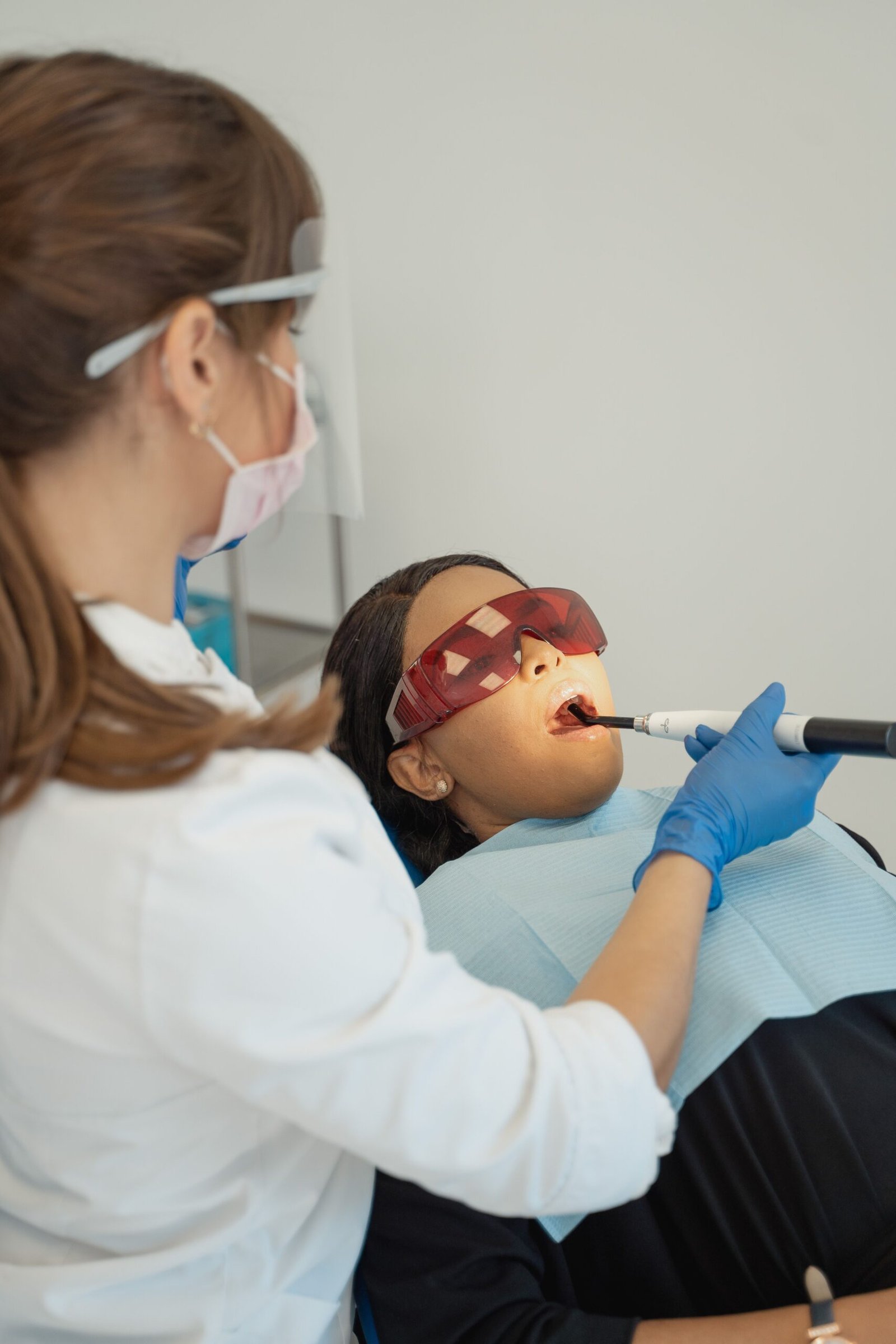
[PERSONAL EXPERIENCE] Patients tend to arrive with a system name in mind and a belief that more technology means a whiter result. The most useful thing to say at that point is that the realistic range is the same one the trials report, around three shade-guide units on average, with wide individual variation, whichever lamp is used.
For what that average looks like in a patient trial, see the cost guide’s breakdown of the 130-patient trial, where in-office and tray whitening landed within half a unit of each other.
Does Light Make Sensitivity Worse?
The evidence is mixed, but it points in one direction: light doesn’t reduce sensitivity, and it may add some. The 2012 meta-analysis found light-activated systems caused more tooth sensitivity than non-light systems, with an odds ratio of 3.53 (95% CI 1.37 to 9.10), and the authors advised using them with great caution or avoiding them (He et al., Journal of Dentistry, 2012).
The 2026 umbrella review found a less alarming picture on incidence. Its pooled risk ratio for sensitivity with activation was about 1.0 (95% CI 0.8 to 1.3), so it found no clear rise in how many patients reported sensitivity. It also found no reduction, and higher-energy protocols with poor cooling had numerically higher sensitivity, though that interval crossed the null (Allende et al., Journal of Esthetic and Restorative Dentistry, 2026).
There’s also a heat question. The umbrella review noted that safety is parameter-dependent, and that some high-power activation protocols approached the roughly 5.5°C pulpal temperature rise associated with irreversible damage (Allende et al., Journal of Esthetic and Restorative Dentistry, 2026). That’s a reason cooling and energy settings matter. It isn’t evidence that a lamp used within normal protocols is harmful, which is why the broader safety guide treats the light as an optional add-on rather than a hazard.
Where Does Light Actually Have Evidence?
In a different job. Photobiomodulation, a low-level light or laser applied to reduce post-bleaching sensitivity, is not the same thing as the activation lamp sold to speed whitening. The umbrella review pooled five placebo-controlled trials (288 participants) and found it reduced post-bleaching sensitivity without reducing whitening efficacy (Allende et al., Journal of Esthetic and Restorative Dentistry, 2026).
The effects were modest per session and grew with repeated use. The standardized mean difference on a sensitivity scale was about -0.3 after the first session, -0.3 after the second, and about -0.8 after the third. Color change against placebo was not significantly different, a mean difference of 0.6 (95% CI -0.6 to 1.9), which is what you’d want from a sensitivity add-on that doesn’t compromise the result. The authors’ certainty rating for this use was moderate, a higher rating than the review gave to light for whitening.
So “does the light help?” has two different answers. As a whitening accelerator, the evidence doesn’t support it. As a sensitivity reducer, there’s moderate-certainty evidence, from a smaller body of trials, using different equipment and settings.
How Do Laser, Zoom, and Trays Actually Differ?
On time and durability, not on shade. All three routes aim at the same chemistry, and the trials show them landing in the same place. What differs is how long treatment takes, what it costs, and how long the result holds.
| Option | What it is | Role of the light |
|---|---|---|
| In-office, Zoom-type | High-strength peroxide gel plus an LED lamp | Optional step, no demonstrated added whitening |
| In-office, laser | Peroxide gel plus a diode or similar laser | Optional step, no demonstrated added whitening |
| In-office, gel only | The same gel applied without a lamp | None |
| Custom trays | Molded trays with lower-strength gel, worn at home | None |
The clearest difference is time. In the 130-patient trial summarized in the cost guide, the in-office group had 35% hydrogen peroxide for 40 minutes, twice. The tray group wore 10% carbamide peroxide for at least two hours a day over 14 days. They ended within half a unit of each other (Donassollo et al., Journal of Applied Oral Science, 2021).
Durability is the other side of that trade, and it’s covered in more depth in the guide to how long whitening lasts. In short, a 30-study review associated in-office bleaching with higher recurrence than at-home carbamide peroxide (Butera et al., Bioengineering, 2024).
What Should You Ask Before Paying for the Light?
Four questions separate a sound quote from a branded one:
- What peroxide concentration is the in-office gel, and does the quote price the lamp or laser separately?
- Is there a desensitizing step, and is photobiomodulation or another sensitivity measure included?
- How many sessions does the price cover?
- What happens to visible fillings, crowns, or veneers that won’t change shade?
Isn’t that the better frame? The lamp is an optional component, so the question isn’t “laser or Zoom” but “which parts of this quote are doing something the evidence supports?” The cost guide covers how to compare quotes line by line.
[ORIGINAL DATA] We’re evaluating recording, in general terms, how often patients in this practice choose trays over a single in-office session after the evidence is explained, without publishing a figure until the case mix is properly documented across a larger patient base.
Frequently Asked Questions
Does laser teeth whitening work better than Zoom?
The reviewed evidence doesn’t separate them in a clinically meaningful way. A 2026 umbrella review grouped laser and light activation and found no improvement in final whitening. The only reported advantage was in a lab comparison of laser types, which the authors judged of limited clinical relevance.
Is laser whitening more likely to cause sensitivity?
Possibly, depending on protocol. A 2012 meta-analysis found 3.53-times higher odds of sensitivity with light, while a 2026 umbrella review found a risk ratio near 1.0. Higher-energy protocols with poor cooling had numerically higher sensitivity, though that interval crossed the null.
Do take-home trays use a light?
No. Trays rely on a lower-strength gel worn for longer. In a 130-patient trial, 10% carbamide peroxide trays worn for at least two hours a day over 14 days produced 3.5 shade units, against 3.0 for two in-office sessions, a gap that was not statistically significant.
Can a light reduce whitening sensitivity?
A different kind can. Photobiomodulation reduced post-bleaching sensitivity in five placebo-controlled trials of 288 participants without lowering whitening, with a moderate certainty rating. The activation lamp used to speed whitening is a separate technique and didn’t reduce sensitivity.
Should I pay extra for laser or Zoom whitening?
The evidence doesn’t support paying more for extra whitening. If the added cost buys a service you value, such as speed or a clinic’s established protocol, that’s a fair reason, but it isn’t a brighter result. The cost breakdown shows what each tier typically includes.
Conclusion
The light is the visible part of premium whitening, and the pooled evidence doesn’t show it adding whitening. It may add some sensitivity, though the data disagree on how much, and the one light-based technique with support is a separate sensitivity treatment.
The practical step is to treat the lamp or laser as an optional line item, ask about gel concentration and sessions, and compare quotes on those terms. For whether whitening is right for your teeth in the first place, see Is Teeth Whitening Safe? Sensitivity, Enamel, and Who Should Wait. For the over-the-counter alternative, see Do Teeth Whitening Strips Work?, and for all routes together, the complete whitening guide.
Sources
- Allende JB, Campos-Bijit V, Morales-Gomez C, Diaz L, Gomez VC, Fernandez E, Do Laser and Light Activation Improve In-Office Dental Bleaching Outcomes? An Umbrella Review of Efficacy, Tooth Sensitivity, and Biological Safety, Journal of Esthetic and Restorative Dentistry 2026;38(9):1665-1690, retrieved 2026-10-13 (Tier 1, umbrella review of 10 systematic reviews, 91 unique primary studies; AMSTAR 2 ratings 2 moderate, 3 low, 5 critically low)
- He LB, Shao MY, Tan K, Xu X, Li JY, The effects of light on bleaching and tooth sensitivity during in-office vital bleaching: a systematic review and meta-analysis, Journal of Dentistry 2012;40(8):644-653, retrieved 2026-10-13 (Tier 1, systematic review and meta-analysis, 11 studies pooled)
- Donassollo SH, Donassollo TA, Coser S, Wilde S, Uehara JLS, Chisini LA, Correa MB, Cenci MS, Demarco FF, Triple-blinded randomized clinical trial comparing efficacy and tooth sensitivity of in-office and at-home bleaching techniques, Journal of Applied Oral Science 2021;29:e20200794, retrieved 2026-10-13 (Tier 1, randomized controlled trial, n=130; gel contact times calculated from the reported protocol)
- Butera A et al., Evaluation of the Effectiveness of Different Types of Professional Tooth Whitening: A Systematic Review, Bioengineering (Basel) 2024, retrieved 2026-10-13 (Tier 1, systematic review, 30 studies)
- Philips, Zoom WhiteSpeed in-office whitening treatment, manufacturer product page, retrieved 2026-10-13 (Tier 5, manufacturer marketing; claims footnoted by Philips as lab studies measured in Delta E; sensitivity survey N=135, US, 2013, no comparison group)