A systematic review of over 4,000 conventional bridges found only 74% survival at 15 years, a figure rarely mentioned alongside “bridges are a proven option.” Most comparison content treats tooth replacement as a two-way fight, implant versus denture, or implant versus bridge, when three genuinely different options actually exist.
This guide covers honest data on all three, including what a traditional bridge actually requires doing to the healthy teeth next to the gap.
Key Takeaways A systematic review of over 4,000 conventional bridges found only 74% survival at 15 years, with decay at the ground-down abutment teeth a leading failure cause, versus 94-98% implant survival over a similar timeframe. Bridges cost less upfront ($2,000-5,000) and require no surgery, but permanently alter healthy adjacent teeth. Dentures remain the lowest-cost, fully removable option, with documented long-term bone loss already covered in depth elsewhere on this site.
Quick-Answer Comparison
| Factor | Dental Implant | Dental Bridge | Denture |
|---|---|---|---|
| Upfront cost | AED 5,000-15,000 (single) | $2,000-5,000 (traditional), $1,500-2,500 (Maryland) | Lowest of the three |
| Longevity | 94-98% survival at 10 years | 74% survival at 15 years | No fixed reline/replacement interval |
| Effect on adjacent teeth | None, doesn’t touch neighboring teeth | Requires grinding down two healthy teeth (traditional) | None |
| Bone preservation | Yes, functional loading preserves bone | No | No, accelerates bone loss |
| Surgery required | Yes | No | No |
For the deeper implant-vs-denture data behind this table, including the bone-loss and bite-force studies, see All-on-4 vs. Dentures: What the Data Actually Shows.
What Is a Dental Bridge, and What Types Exist?
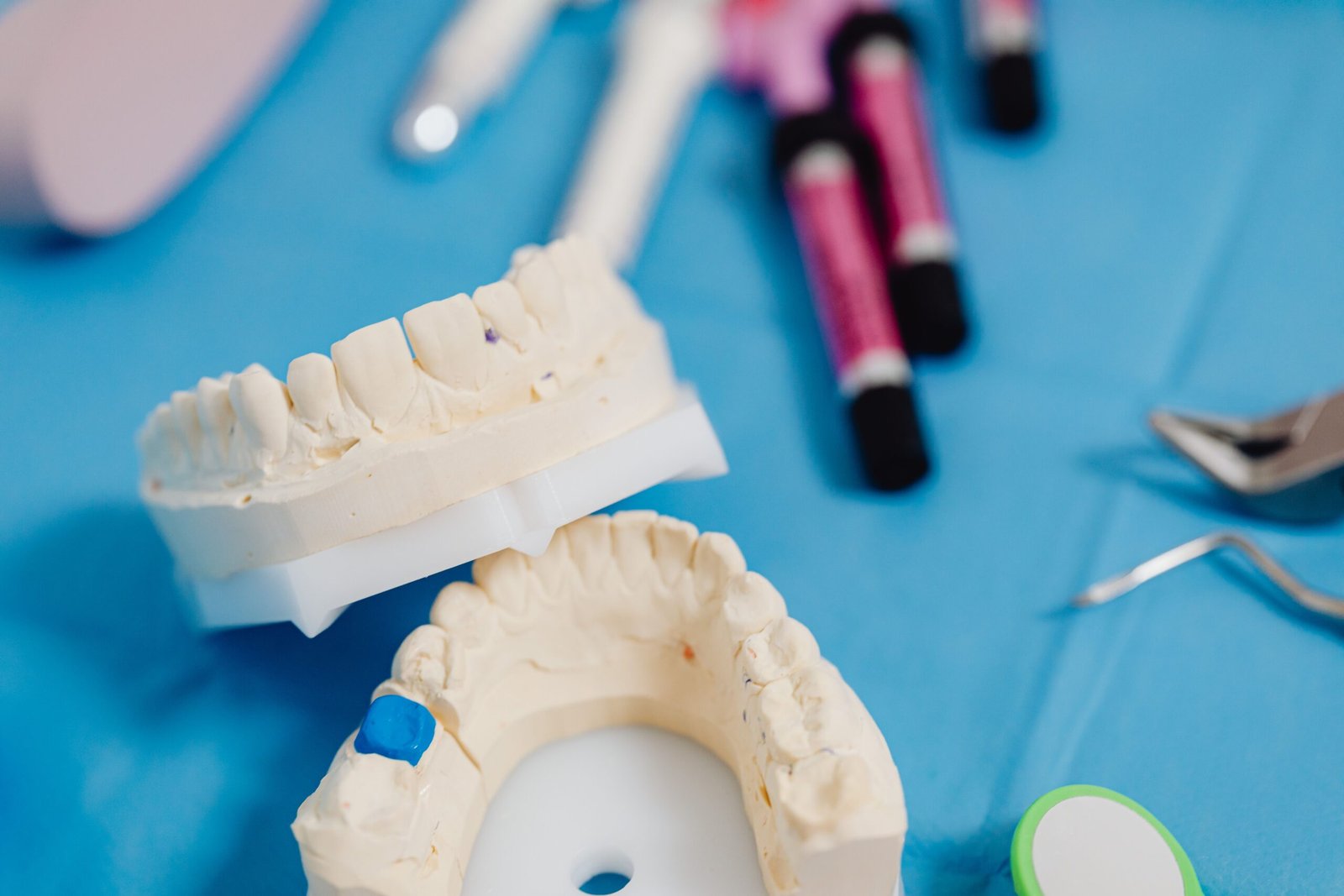
A traditional bridge cements crowns onto the two teeth adjacent to a gap to anchor a false tooth, called a pontic, between them, which requires grinding down those adjacent teeth first to fit the crowns. A Maryland, or resin-bonded, bridge instead uses a metal-winged framework bonded to the back of the adjacent teeth, a less invasive alternative that doesn’t require crowning them.

Cost varies meaningfully by type. Traditional and cantilever bridges typically run $2,000 to 5,000, Maryland bridges run $1,500 to 2,500, and an implant-supported bridge, which spans multiple teeth on two implants rather than natural anchor teeth, runs $5,000 to 15,000. A cantilever bridge is a variant of the traditional design that anchors to only one adjacent tooth instead of two, used when there’s only a tooth on one side of the gap.
Does a Dental Bridge Actually Damage Healthy Teeth?
Yes, in a specific sense: a traditional bridge requires permanently grinding down two healthy adjacent teeth to serve as crowned anchors, an irreversible step neither an implant nor a denture requires. Once those teeth are prepared for crowns, there’s no going back to their original, unaltered state.
[CITATION CAPSULE] Decay at the abutment teeth, the healthy teeth ground down to anchor a traditional bridge, is a commonly cited leading cause of bridge failure, since decay under a cemented crown often isn’t felt until it’s advanced (aggregated dental clinical guidance on bridge failure causes, 2025/2026). That’s the core, rarely-named trade-off of choosing a bridge over an implant.
Isn’t it worth knowing this before assuming a bridge is simply the “cheaper, faster” version of an implant? It’s a genuinely different kind of choice, one that puts previously healthy teeth at ongoing risk in exchange for lower upfront cost and no surgery.
How Long Does Each Option Actually Last?
Implants show 94 to 98% survival at 10 years in general data, while conventional bridges show only 74% survival at 15 years in a systematic review of more than 4,000 cases, a meaningfully different longevity profile despite both often being marketed as “long-term” solutions.
Dentures don’t fail outright the way a bridge or implant can, but they require periodic relining or full replacement, with no fixed evidence-based interval established in the literature. We cover the full denture replacement and bone-loss data in depth elsewhere, including why dentures accelerate jawbone loss over time in a way neither a bridge nor an implant does.
What Does Each Option Cost Upfront?
Bridges typically cost $2,000 to 5,000 for a traditional design or $1,500 to 2,500 for a Maryland bridge, a single implant runs AED 5,000 to 15,000 in Dubai, and dentures remain the lowest upfront cost of the three. No independent, controlled lifetime cost comparison study was found for any of the three options.
For the full single-implant cost breakdown, itemized by component, see Dental Implant Cost in Dubai: 2026 Pricing Guide for Residents & Visitors.
When Might a Bridge Actually Make Sense?
A bridge can be a reasonable choice when the adjacent teeth already need crowns for other reasons, when a patient wants to avoid surgery entirely, or when budget and timeline are the deciding factors, not a universal “worse” option in every case. [UNIQUE INSIGHT] The one scenario where a bridge genuinely loses little relative to an implant is when the abutment teeth were already going to be crowned anyway, the “extra cost” of altering them largely disappears.
A bridge can also be the faster route to a finished result. There’s no osseointegration healing window to wait through, no CBCT-based surgical planning stage, and a traditional bridge can often be completed in two to three visits over a few weeks. That speed is a genuine advantage for a patient facing a firm deadline, a wedding, a work trip, a specific event, where a months-long implant timeline simply isn’t practical.
None of that changes the underlying trade-off, though. Speed and lower upfront cost come at the price of altering two teeth that didn’t need any work to begin with, and a materially lower long-term survival rate than an implant offers. Whether that trade is worth making depends entirely on the individual case, not a generic recommendation either way.
[PERSONAL EXPERIENCE] When this three-way decision comes up at consultation, the conversation usually isn’t “which is best,” it’s “what are you actually trading for what.” A patient avoiding surgery for good medical reasons might reasonably accept a lower survival rate. That’s a legitimate trade-off, not a mistake.
[ORIGINAL DATA] We’re tracking, in general terms, how often patients choose each of the three options once they understand the full trade-offs, without publishing a specific number until that data is properly documented.
Frequently Asked Questions
What’s the difference between a dental bridge and an implant?
A bridge anchors a replacement tooth to the two adjacent natural teeth, which must be ground down for crowns. An implant is a separate titanium or zirconia post placed directly in the jawbone, touching no neighboring teeth at all.
Does a dental bridge damage healthy teeth?
A traditional bridge does, permanently. It requires grinding down two healthy adjacent teeth to serve as crowned anchors, and decay at those teeth is a commonly cited leading cause of bridge failure.
How long does a dental bridge last?
A systematic review of over 4,000 conventional bridges found 74% survival at 15 years, compared with 94-98% implant survival at 10 years, a meaningfully lower longevity profile.
Is a Maryland bridge better than a traditional bridge?
It’s less invasive, since it doesn’t require crowning the adjacent teeth, using bonded metal wings instead. It has its own trade-offs in strength and where it can be used, not a universal upgrade.
Which is better, implant, bridge, or denture?
It depends on the case. Implants preserve bone and adjacent teeth with the highest survival rate; bridges cost less upfront but risk the abutment teeth; dentures cost least but accelerate bone loss over time.
Conclusion
Three genuinely different options exist, not a single “best” choice. The honest trade-off for a bridge specifically is that it’s the only one of the three requiring permanent alteration of healthy adjacent teeth, in exchange for a lower long-term survival rate than an implant. Dentures remain the lowest-cost, fully removable path, with real documented bone-loss consequences over time.
A CBCT-based consultation is the clearest way to know which option, or combination, actually fits a specific case. For the broader orientation this comparison fits into, see Dental Implants Explained: The Complete Patient Guide.
Sources
- Aggregated systematic review reporting on conventional bridge survival (74% at 15 years, 4,000+ cases), retrieved 2026-07-11, 2025/2026 (Tier 3-4, secondary reporting of a systematic review)
- Aggregated osseointegration survival data (94-98% at 10 years), cross-referenced from this site’s Dental Implants Explained pillar guide, retrieved 2026-07-11
- Aggregated dental practice clinical guidance on bridge failure causes (abutment tooth decay), retrieved 2026-07-11, 2025/2026 (Tier 4, clinical consensus)
- Aggregated dental bridge cost guides (traditional, cantilever, Maryland, implant-supported), retrieved 2026-07-11, 2025/2026 (Tier 4, directional only, US-sourced)
- Tallgren A., The Continuing Reduction of the Residual Alveolar Ridges in Complete Denture Wearers: A Mixed-Longitudinal Study, Journal of Prosthetic Dentistry, retrieved 2026-07-11, 1972 (cross-referenced, already cited in full in the All-on-4 vs. Dentures spoke)