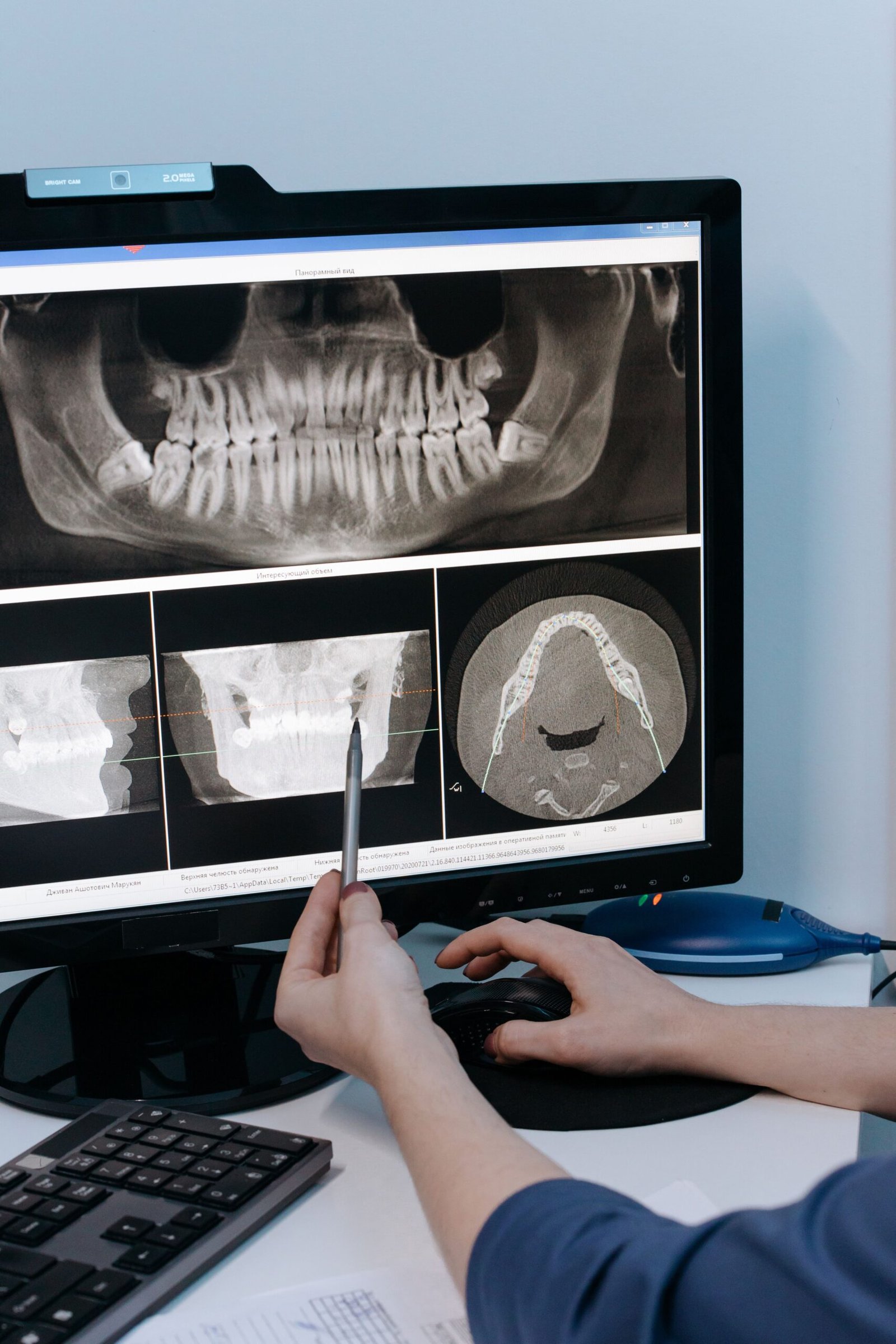
The alveolar ridge loses roughly 50% of its width within 12 months of a tooth going unreplaced, and most of that loss happens in the first three months, not spread evenly across the year. Most patients treat “deciding what to do” as a neutral waiting period. Biologically, it isn’t.
This guide covers the documented timeline for bone loss, what happens to neighboring and opposing teeth, and what delay actually costs in eventual treatment, using peer-reviewed measurements rather than vague warnings.
Key Takeaways The alveolar ridge loses roughly 50% of its width within 12 months of a tooth going unreplaced, with the ridge shrinking from about 12mm to 6mm in a landmark 12-month study, and most of that change concentrated in the first three months. Neighboring teeth measurably tip toward the gap, and an unopposed tooth can overerupt, with one 12-year study finding 4.9 times higher risk of 2mm-plus overeruption. Waiting typically adds bone grafting ($500-1,500+) and sometimes a sinus lift ($1,500-3,000+) to eventual treatment.
How Fast Does Bone Loss Actually Start After Losing a Tooth?
A landmark 12-month prospective study found the alveolar ridge narrowed from roughly 12mm to 6mm after single-tooth extraction, a 50% width loss, with the dimensional change concentrated predominantly in the first three months rather than spread evenly across the year (Schropp et al., Bone Healing and Soft Tissue Contour Changes Following Single-Tooth Extraction, International Journal of Periodontics and Restorative Dentistry, 2003). That’s the field’s benchmark study on the subject, still cited as the standard reference over two decades later.
[CITATION CAPSULE] A landmark 12-month clinical study found alveolar ridge width dropped from roughly 12mm to 6mm after single-tooth extraction, a 50% reduction, with most of the change occurring in the first three months (Schropp et al., International Journal of Periodontics and Restorative Dentistry, 2003). This front-loaded timeline is why bone volume assessment matters early, not just eventually.
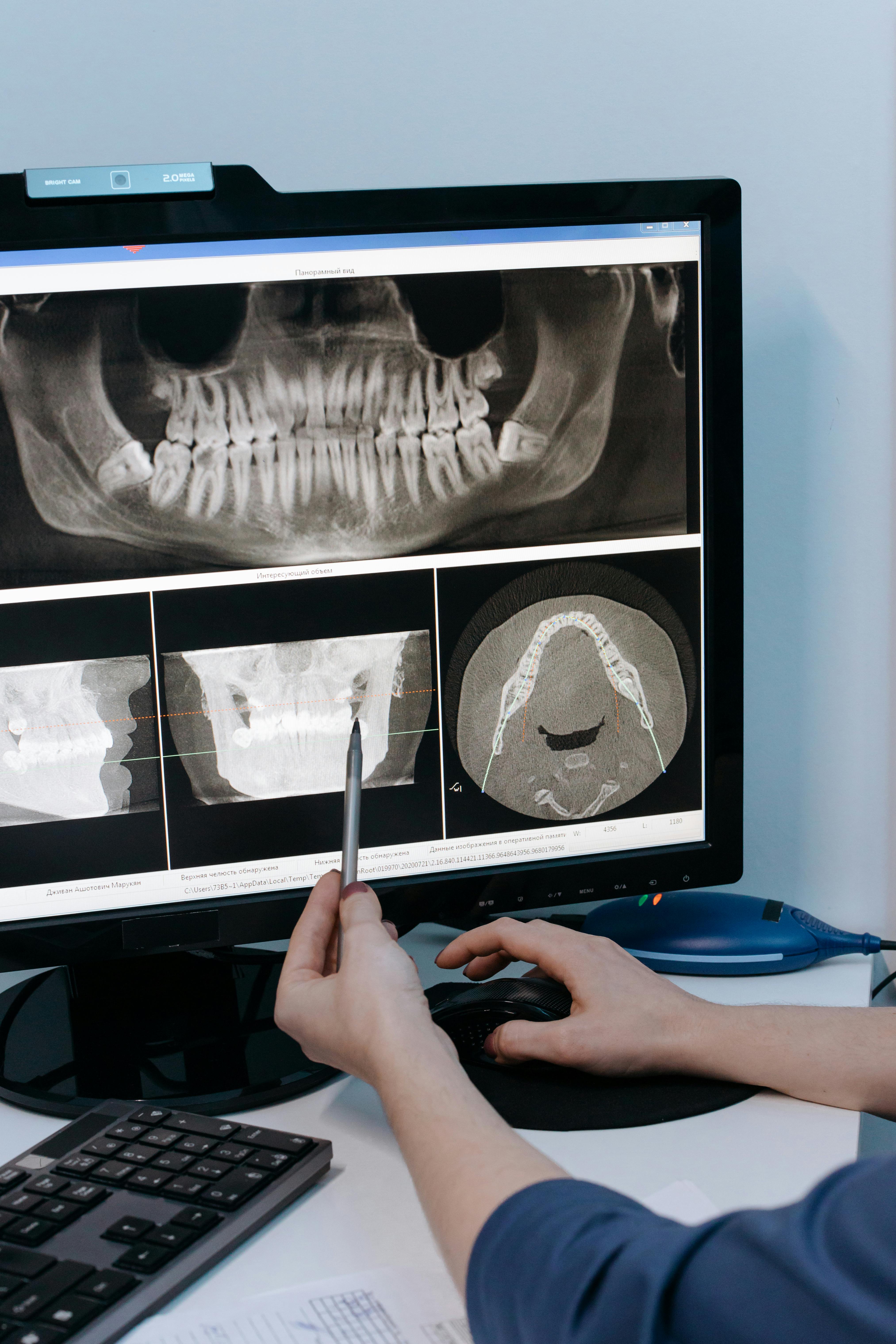
Isn’t it worth knowing the clock starts within weeks, not years, before treating “I’ll deal with it eventually” as a cost-free choice? For the scan that actually measures where a specific case stands on this timeline, see What Is a CBCT Scan, and Why Does It Matter for Implants?
Do Neighboring Teeth Actually Move Into the Gap?
Yes, measurably. A 3D-imaging study of 45 patients and 75 drift models found maxillary first molars moved mesially at roughly 0.386mm per month with 1.127 degrees per month of tipping after a neighboring premolar extraction, while canines drifted distally at roughly 0.482mm per month with rotation and extrusion (Scientific Reports, Three-Dimensional Analysis of the Physiologic Drift of Adjacent Teeth, 2019).
That’s not a hypothetical risk, it’s a measured rate of movement toward the gap, month over month. The study also found younger patients showed significantly faster posterior tooth drift, and that this movement, left unaddressed, poses a genuine anchorage-loss risk for future orthodontic or restorative work.
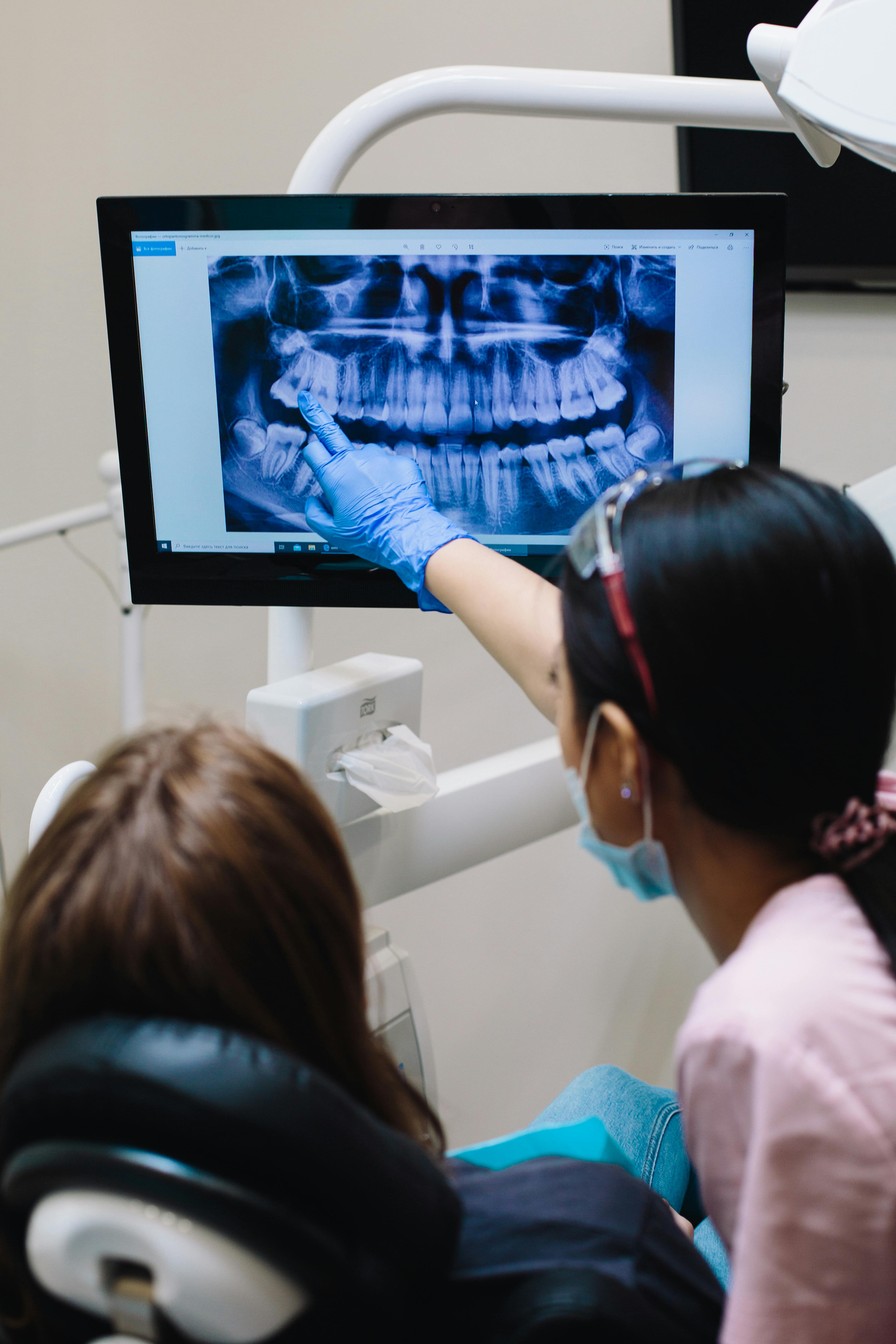
A tipped, drifted tooth doesn’t just complicate a future implant site. It can affect how the bite closes and how easily that area can be cleaned day to day. Why let a fixable gap become a moving target?
What Happens to the Tooth on the Other Side of the Bite?
An unopposed tooth, with nothing to bite against, can supraerupt over time. In one clinical study, supraeruption values of 0.7 to 1.2mm accounted for nearly half (47.5%) of cases measured, and a separate 12-year longitudinal study found unopposed molars carried 4.9 times higher risk of 2mm or more of overeruption (Journal of Contemporary Dental Practice, Clinical and Radiographical Measurements of Supraeruption, 2021).
[UNIQUE INSIGHT] Bone loss, adjacent drift, and opposing supraeruption aren’t three separate risks running in parallel, they compound. A tipped neighbor and a supraerupted opposing tooth can both complicate implant placement on top of whatever bone volume remains, sometimes requiring their own correction first.
Does Waiting Actually Make Treatment More Expensive?
Bone grafting typically adds $500 to 1,500-plus per site, and a sinus lift adds another $1,500 to 3,000-plus for upper posterior cases, together adding 3 to 9 months to the treatment timeline and $1,500 to 5,000 to overall cost before implant placement can even begin. This isn’t automatic for every case, but it becomes more likely the longer a site goes unaddressed.
That’s the direct mechanism connecting delay to cost: bone volume that would have supported standard placement early on can drop below that threshold later, making grafting a prerequisite rather than an option.
For the itemized cost detail behind grafting as a line item, see All-on-4 Cost in Dubai: What’s Actually in the Price. For the full single-implant cost this cascade builds from, see Dental Implant Cost in Dubai: 2026 Pricing Guide for Residents & Visitors.
[PERSONAL EXPERIENCE] A consultation for someone who lost a tooth last month looks genuinely different from one for someone who’s waited three years. The conversation shifts from “here’s your options” to “here’s what we need to address first before we can talk about options,” a longer, more expensive road to the same destination.
[ORIGINAL DATA] We’re tracking, in general terms, how often a delayed case ends up needing grafting that an earlier case wouldn’t have required. We’re not ready to publish a specific number yet, but it’s a pattern worth documenting properly rather than guessing at.
Is a CBCT Scan Different for a Long-Delayed Case?
A CBCT scan measures exactly the bone volume and site complexity this cascade produces, the same scan already used for standard implant planning, applied here to a case where time has already changed the starting conditions. It’s the only way to know precisely where a specific site actually stands, rather than estimating from how long it’s been.
In a long-delayed case, that scan more often reveals whether grafting is needed and, in the upper jaw specifically, how close the maxillary sinus has moved as bone above it resorbed. We cover what the scan shows and how it changes treatment planning in full elsewhere.
Frequently Asked Questions
How fast does bone loss happen after losing a tooth?
Roughly 50% of ridge width is lost within 12 months, with most of that change concentrated in the first three months, according to a landmark 12-month clinical study, not a slow, evenly-paced process.
Do teeth actually move into a gap if it’s not replaced?
Yes. A 3D-imaging study measured neighboring molars drifting toward an extraction space at roughly 0.386mm per month with measurable tipping, and canines drifting distally with rotation and extrusion.
What happens to the opposing tooth if a missing tooth isn’t replaced?
It can supraerupt. One study found 0.7-1.2mm supraeruption in nearly half of measured cases, while a separate 12-year study found unopposed molars had 4.9 times higher risk of 2mm-plus overeruption.
Is it more expensive to wait to get an implant?
Often, yes. Bone grafting can add $500-1,500-plus and a sinus lift $1,500-3,000-plus, together adding 3-9 months and $1,500-5,000 to treatment, though this isn’t automatic for every case.
Is there a safe amount of time to wait before treatment gets harder?
There’s no fixed universal number, but the front-loaded bone loss timeline, most change within three months, argues for an early evaluation rather than an open-ended wait.
Conclusion
The consequences of an unreplaced tooth aren’t a vague future risk. They’re a documented, measured, front-loaded biological timeline that starts within weeks, affecting bone volume, neighboring teeth, and the opposing tooth simultaneously. Waiting doesn’t pause that process, it just changes what treatment looks like by the time you address it.
A CBCT-based evaluation is the only way to know exactly where a specific case stands on that timeline. For the complete Dubai pricing picture that follows from an evaluation, see Dental Implant Cost in Dubai: 2026 Pricing Guide for Residents & Visitors. For the broader orientation this piece fits into, covering implant types, candidacy, and honest success-rate data, see Dental Implants Explained: The Complete Patient Guide.
Sources
- Schropp L, et al., Bone Healing and Soft Tissue Contour Changes Following Single-Tooth Extraction: A Clinical and Radiographic 12-Month Prospective Study, International Journal of Periodontics and Restorative Dentistry, retrieved 2026-07-11, 2003
- Three-Dimensional Analysis of the Physiologic Drift of Adjacent Teeth Following Maxillary First Premolar Extractions, Scientific Reports, retrieved 2026-07-11, 2019
- Clinical and Radiographical Measurements of Supraeruption and Occlusal Interferences in Unopposed Posterior Teeth, Journal of Contemporary Dental Practice, retrieved 2026-07-11, 2021
- Aggregated dental treatment-cost guides on delayed-treatment cascade (grafting and sinus lift cost/timeline addition), retrieved 2026-07-11, 2025/2026 (Tier 4, directional only, not from a controlled cost study)