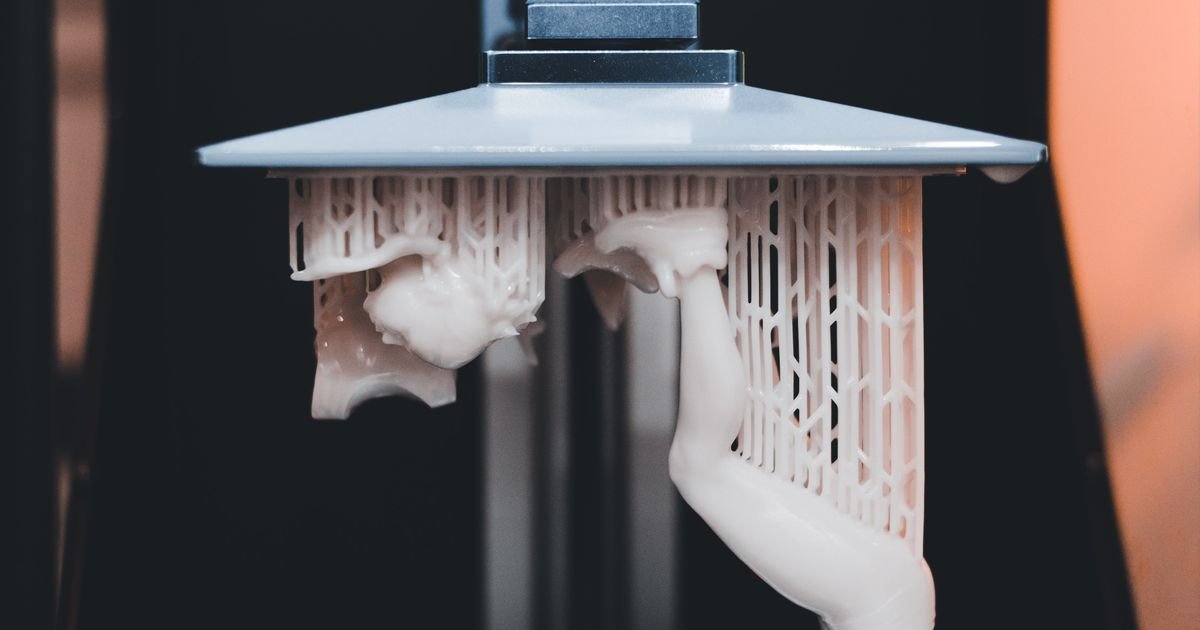
A 2021 cost-benefit study of 79 implant guides found in-house 3D printing costs roughly $175 per guide, versus about $350 for an outsourced lab guide, while cutting a 1-2 week shipping cycle down to same-day or next-day. That’s a documented number from a real cohort, not a marketing estimate.
“In-house 3D printing” gets listed as a practice feature constantly, but rarely explained. This guide covers what actually changes: turnaround time, real cost data, and an honest look at accuracy, because desktop printers and industrial lab printers are not quite the same thing.
Key Takeaways
- In-house guides cost about $175 versus $350 for an outsourced lab guide, a documented cost-benefit finding, not an estimate (J Oral Maxillofac Surg, 2021).
- In-house fabrication eliminates the shipping cycle entirely, cutting a 1-2 week wait down to about 24 hours.
- Desktop 3D printers are measurably less precise than industrial lab printers, though the gap stays within a clinically acceptable range.
How Much Faster Is In-House Fabrication?
In-house 3D-printed surgical guides can be designed and printed within about 24 hours of a scan, compared to 1-2 weeks for an outsourced lab working digitally, and 2-4 weeks when physical models need shipping. A 2021 cohort study of 79 in-house implant guides confirmed the underlying mechanism: eliminating the outsourcing shipping and lab-queue cycle entirely, not just printing faster (J Oral Maxillofac Surg, 2021).

Where does that time actually go in an outsourced workflow? Shipping both directions, plus queue time at the lab itself. In-house fabrication doesn’t just speed up the printing step, it removes two entire logistics steps from the timeline.
For the scan that starts the same turnaround clock, see What Is a CBCT Scan, and Why Does It Matter for Implants?
Does an In-House Cost Advantage Actually Exist?
Yes, and it’s been directly measured, not estimated. The same 2021 cost-benefit study found an average cost of roughly $175 per in-house guide, versus about $350 for an outsourced lab guide, across an annual system cost of $13,790 documented for 79 guides (J Oral Maxillofac Surg, 2021).
Worth noting honestly: this is US-market cost data, not independently verified for Dubai or UAE pricing specifically. Ask your clinic directly if local cost transparency matters to you.
Is In-House 3D Printing as Accurate as a Lab?
Not quite, and it’s worth saying that plainly. A 2022 study found desktop SLA printers deviated 11 to 240 micrometers depending on resin, compared to 8 to 120 micrometers for an industrial lab-grade SLA printer, while 5-axis milling showed no significant deviation from the digital design at all (PMC9902032, Journal of Prosthodontics, 2022).
[UNIQUE INSIGHT] Most in-house 3D printing marketing implies zero tradeoff versus a lab. The honest picture is different: desktop printers are measurably less precise, the gap just happens to fall within a clinically acceptable range for surgical guide use. That’s a real distinction, not a rounding error, even if it doesn’t change the clinical outcome.
A 2025 study of chairside-class printers found more reassuring numbers for modern equipment: both SLA and DLP printers delivered 0.12 to 0.15mm RMS deviation for surgical guides, with DLP printing 2 to 3 times faster. Printer technology keeps closing this gap.
For how the guide itself is designed before it’s printed, see 3D Guided Implant Surgery: How Surgical Guides Improve Accuracy.
What Material and Sterilization Standards Apply to Printed Guides?
Surgical guide resins are regulated as Class IIa (EU) or Class II (US) medical devices, requiring biocompatibility documentation distinct from standard model resins. Steam sterilization measurably changes guide dimensions too, a detail almost never mentioned in patient-facing content.
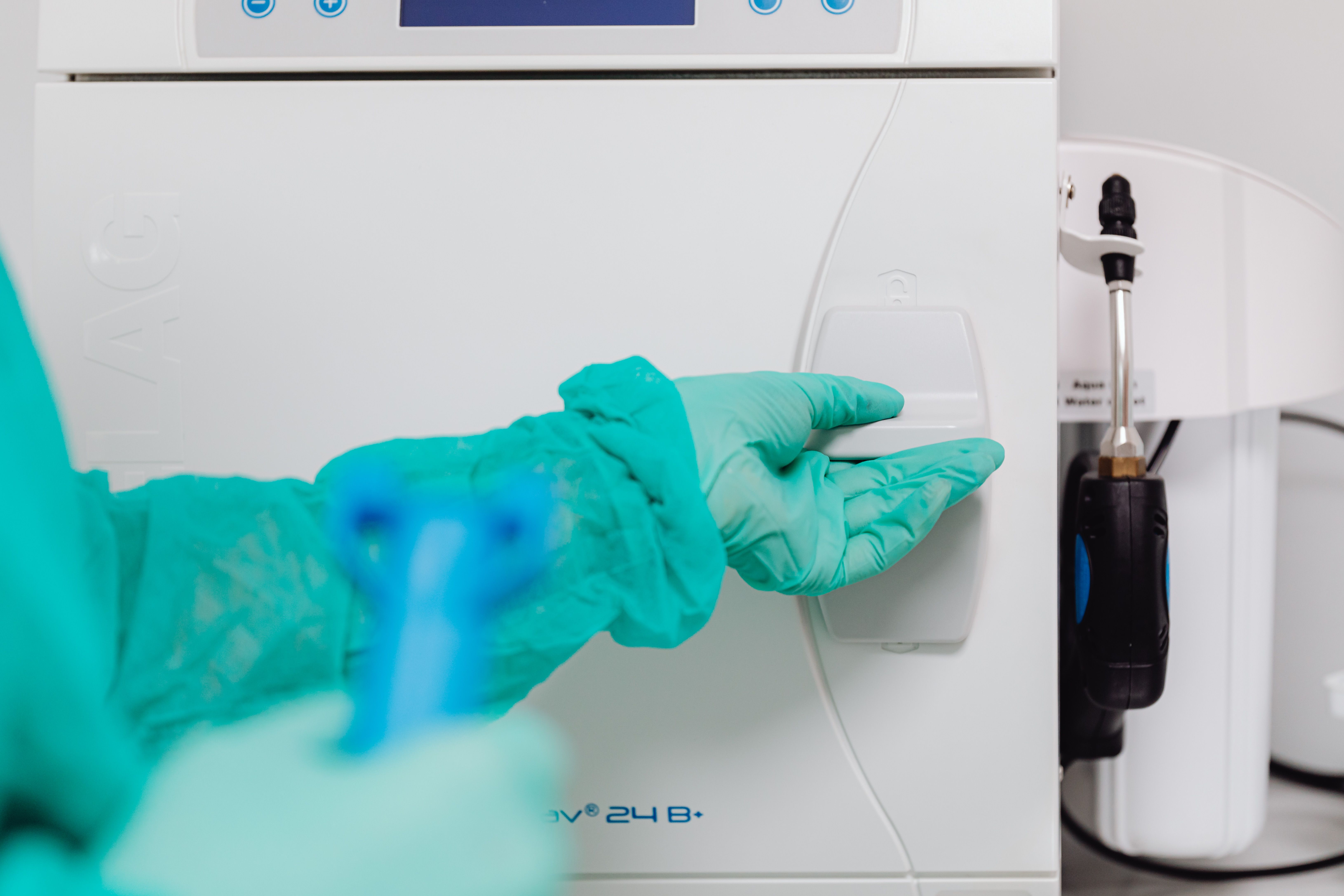
RMS deviation rises from under 100 micrometers before sterilization to under 200 micrometers after, according to one study, still within the 0.20 to 0.50mm range considered clinically acceptable for four of five resins tested (PMC7291001, Journal of Clinical Medicine, 2020).
[PERSONAL EXPERIENCE] The practical difference day to day is simple: a guide printed overnight after a scan versus waiting for a courier to arrive from an outside lab. Patients notice the timeline change more than any accuracy figure.
What Does In-House Fabrication Actually Change for Patients?
The practical difference is timeline. A patient whose treatment plan needs a surgical guide can move from scan to surgery in roughly a week instead of two to four, without sacrificing accuracy outside the clinically acceptable range. Cost, speed, and honest precision, together, are what “in-house” should actually mean.
[ORIGINAL DATA] We’re building toward tracking our own scan-to-guide turnaround time, benchmarked against the published in-house and outsourced figures above, rather than relying only on external data indefinitely.
Frequently Asked Questions
How accurate is an in-office 3D printed surgical guide compared to a lab guide?
Desktop printers show somewhat higher deviation, 11 to 240 micrometers, than industrial lab printers at 8 to 120 micrometers, but both fall within the clinically acceptable range for surgical guides.
Can a dental office 3D print a surgical guide the same day as the scan?
Often within about 24 hours, compared to 1-2 weeks for a digitally outsourced lab guide and 2-4 weeks when physical models require shipping.
Is in-house 3D printing as good as an outsourced dental lab?
Not identical in precision. Desktop printers measure somewhat less accurate than industrial ones, but the difference stays within a clinically acceptable range, and in-house fabrication removes the shipping delay entirely.
Can 3D printed surgical guides be sterilized safely?
Yes, though sterilization does measurably change guide dimensions. One study found deviation rising from under 100 to under 200 micrometers after autoclaving, still within the accepted clinical range for most tested resins.
[INTERNAL-LINK: candidacy and treatment timelines overall → Am I a Good Candidate for Dental Implants? full eligibility guide]
Conclusion
In-house fabrication is a real, documented cost and time advantage, not just a convenience claim. It also comes with a genuine, if clinically acceptable, precision tradeoff worth understanding rather than being told doesn’t exist. Roughly half the cost per guide, a fraction of the wait time, and accuracy that stays within accepted clinical ranges even with the desktop-versus-industrial gap.
Ask whether your clinic’s guides are printed in-house or outsourced, and what printer class they use, if precision is a concern for your specific case. That question, more than the word “digital,” tells you what you’re actually getting.
For the complete digital implant workflow, see Digital Dental Implants in Dubai.
Sources
- Journal of Oral and Maxillofacial Surgery, Cost-Benefit Analysis of Point-of-Care Dental Implant Guides, retrieved 2026-07-09, 2021
- PMC, Accuracy of Desktop vs. Industrial 3D Printers for Dental Applications, Journal of Prosthodontics, retrieved 2026-07-09, 2022
- PMC, Chairside SLA and DLP Printer Accuracy for Surgical Guides, Dentistry Journal, retrieved 2026-07-09, 2025
- PMC, Effect of Steam Sterilization on 3D-Printed Surgical Guide Dimensional Accuracy, Journal of Clinical Medicine, retrieved 2026-07-09, 2020