Tooth-supported surgical guides average just 0.24mm of deviation at the implant apex, roughly seven times tighter than the 1.68mm typical of mucosa-supported guides in partially dentate patients (PMC12086982, Clinical and Experimental Dental Research, 2025). Most patients hear “guided surgery” described as one single technique. It isn’t.
This guide breaks down the three guide-support types, the static-versus-dynamic navigation choice you’ll rarely see explained anywhere, how the digital plan is actually built, and where guided surgery has real, honest limitations.
Key Takeaways
- Tooth-supported guides average 0.24mm apex deviation, versus roughly 1.68mm for mucosa-supported guides (PMC12086982, 2025).
- Static guides and dynamic real-time navigation perform comparably (p=0.08), both far ahead of freehand placement.
- Guided surgery’s digital precision doesn’t remove physical limits: only 30% of older patients have enough mouth opening for guided molar placement.
What Is a Surgical Guide, and How Is It Made?
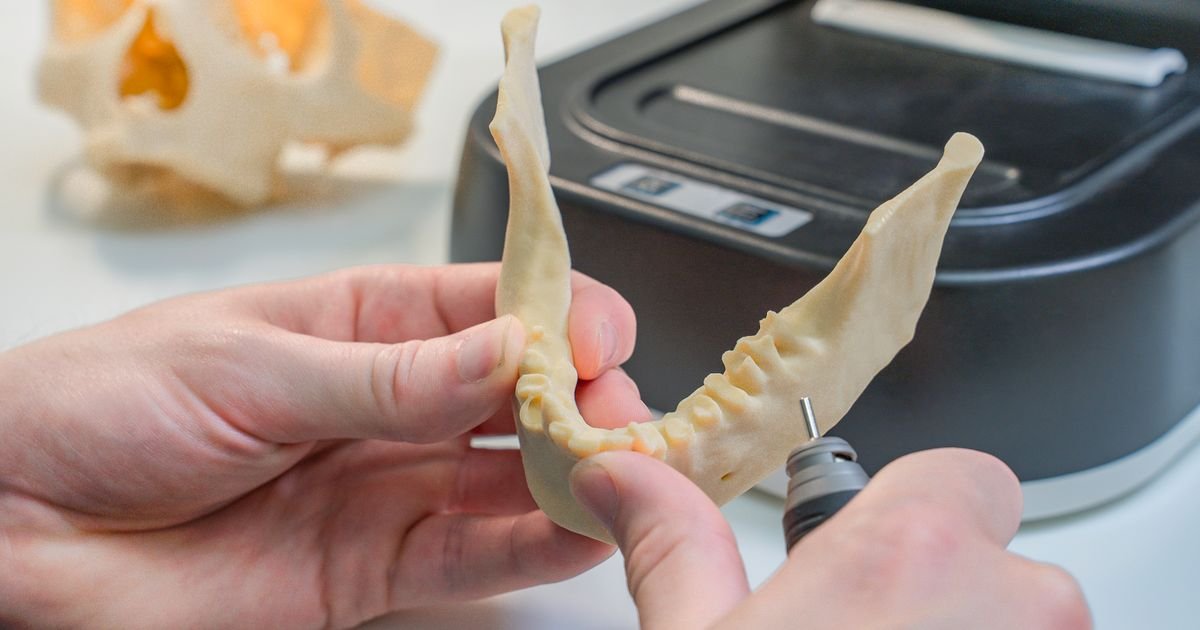
A surgical guide is a 3D-printed template that fits over your teeth or gum tissue, with metal-lined sleeves that lock a drill to the exact position, angle, and depth planned from your CBCT scan. It’s the physical object that turns a digital surgical plan into something a surgeon can actually use in the mouth.
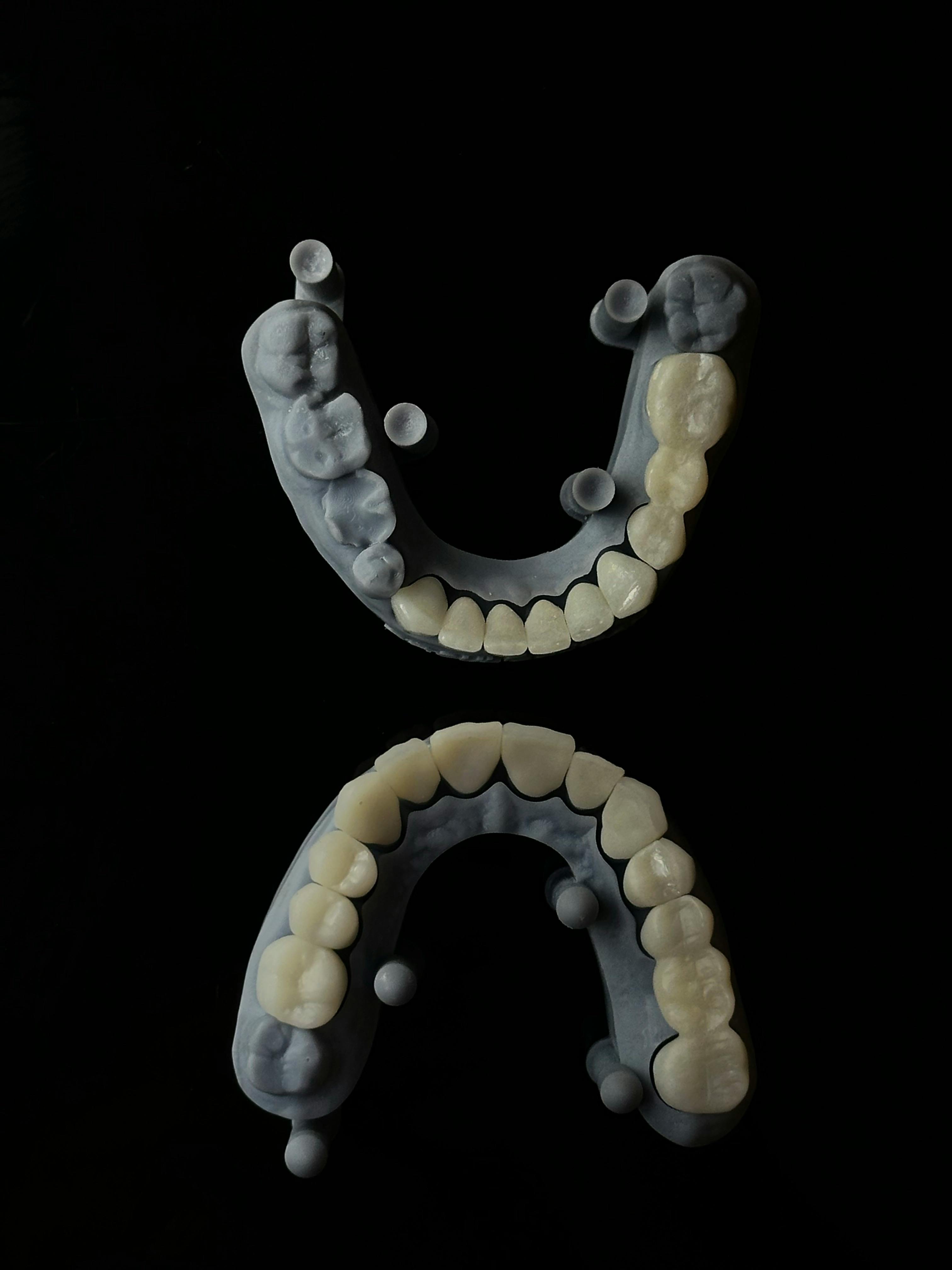
The guide is printed from the same data set that mapped your bone density, nerve position, and sinus anatomy. Nothing about the guide is generic. It’s built entirely around your own anatomy, which is exactly why the choice of what the guide rests on, discussed next, changes how accurately it performs.
For the scan data behind every surgical guide, see What Is a CBCT Scan, and Why Does It Matter for Implants?
Tooth-Supported vs. Bone-Supported vs. Mucosa-Supported Guides
Tooth-supported guides average just 0.43mm of entry-point deviation and 0.24mm at the apex, the tightest of the three support types, based on a 2025 study of 21 patients and 37 implants (PMC12086982). Why does the support surface matter this much? A guide resting on stable, unmoving teeth simply tracks more precisely than one resting on soft, compressible gum tissue.
That’s not a small distinction. Bone-supported guides, anchored directly to exposed bone, average around 1.16mm of apical deviation. Mucosa-supported guides, resting on soft tissue, average closer to 1.68mm. The right choice depends on your case: tooth-supported for partially dentate patients with stable neighboring teeth, bone-supported for edentulous ridges where the surgeon exposes bone anyway, mucosa-supported for flapless full-arch cases where nothing gets exposed at all.
[UNIQUE INSIGHT] Almost no patient-facing Dubai clinic content distinguishes these three support types at all. Most pages simply say “custom 3D guide,” as if the choice of what it rests on were an implementation detail rather than something that changes accuracy by a factor of seven.
A related question worth asking your clinic directly: which support type do they default to, and why? If the answer is “whichever the software suggests” rather than a case-specific decision, that’s worth probing further.
Static vs. Dynamic Guided Surgery: What’s the Difference?
Static guides are fixed 3D-printed templates, the type described above. Dynamic navigation instead tracks the drill in real time on a screen, without any physical guide at all, more like GPS for implant placement. A 2025 meta-analysis of 554 patients found no statistically significant accuracy difference between the two approaches (p=0.08).
Both crush freehand placement on every measure. Angular deviation runs 2.14 degrees for dynamic navigation and 3.31 degrees for static guides, compared with 10.04 degrees freehand (PMC12511214, 2025). So which should you choose? Dynamic systems carry a per-case navigation fee and a steeper initial learning curve for the surgeon, one that converges with experience after roughly 12 to 27 procedures. Static guides cost less per case but can’t adapt mid-surgery if anatomy doesn’t match the plan exactly.
[PERSONAL EXPERIENCE] For a recent full-arch case with limited posterior access, we chose static guidance specifically because the fixed sleeve positions gave more predictable depth control in a tight surgical field, not because dynamic navigation is less accurate. The right choice is almost always about the specific case, not a blanket preference for one system.
How Is the Digital Surgical Plan Actually Built?
The plan merges two scans, a CBCT scan of your bone and an intraoral digital scan of your teeth and gums, superimposed using anatomical landmarks. That merge is where accuracy either holds or slips. Planning software choice measurably changes the result: one system achieves 0.60mm of registration error in the upper jaw, while another runs 1.09 to 1.18mm (PMC7785548).
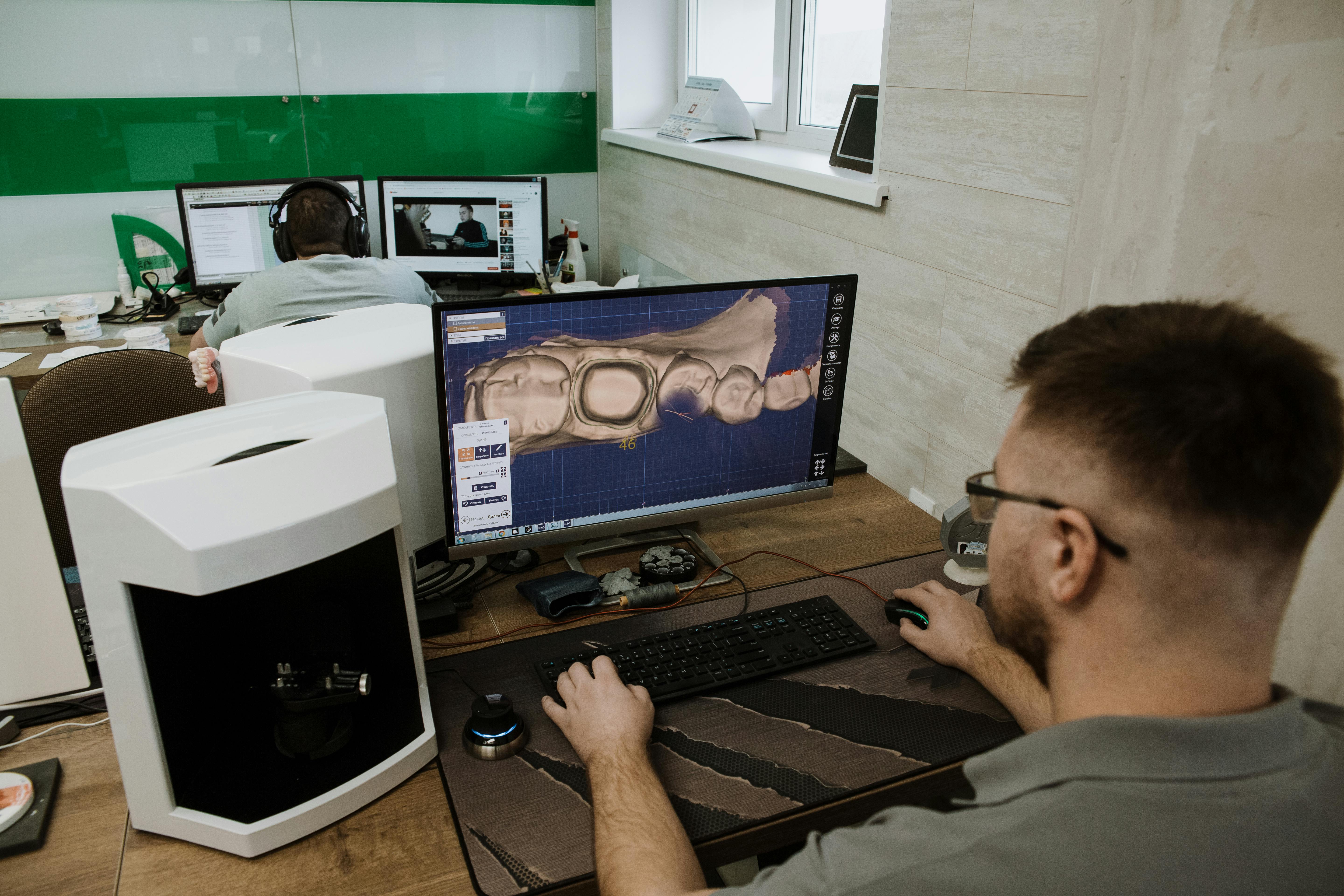
Isn’t it strange that software choice, a decision made entirely behind the scenes, can shift accuracy by half a millimeter before the guide is even printed? It’s one more reason “we use digital planning” tells you less than it sounds like it should.
For the full CBCT-to-crown workflow, see Digital Dental Implants in Dubai.
Where Guided Surgery Has Real Limitations
Only 30% of older patients had enough mouth opening for guided placement in the molar region, versus 98.9% for the front teeth, a physical constraint no amount of digital planning removes (PubMed 38302300, 2024). A sleeve and drill assembly simply needs room to maneuver, and the back of the mouth doesn’t always provide it.
Guided drilling also generates slightly more heat than freehand drilling, a 0.80°C rise compared with 0.33°C, caused by the sleeve restricting irrigation flow (PMC10173627, 2023). Both stay well under the 10°C threshold considered safe for bone, but it’s a real tradeoff, not a hypothetical one. Guides also can’t adapt mid-surgery if the anatomy doesn’t match the plan exactly, and fit can be less reliable in severely atrophic ridges.
For why in-house fabrication reduces guide fit and turnaround issues, see In-House 3D Printing: Why It Speeds Up Implant Treatment.
How Long Does a Surgical Guide Take, and What Does It Cost?
A surgical guide typically takes one to two weeks to design and fabricate once your scans are captured (PMC9292957). In-house 3D printing can shorten that considerably compared with sending the design to an outside lab and waiting for it to ship back.
[ORIGINAL DATA] Published guide-fabrication costs are almost entirely US-market figures, not UAE data, so we’re not going to repeat a number here that wouldn’t reflect Dubai pricing. Ask your clinic directly for a local quote, and ask specifically whether guide fabrication is billed separately from the surgery itself.
Frequently Asked Questions
How much does guided implant surgery cost?
Guide fabrication costs vary widely by lab and region. Published figures are largely US-market data, so ask your clinic directly for Dubai-specific pricing rather than relying on international ranges.
Is guided implant surgery painful?
There’s no dedicated study directly comparing pain between guided and freehand surgery. The flapless approach guided surgery often enables tends to involve less surgical trauma, generally associated with a more comfortable recovery.
Static vs. dynamic guided surgery, which is more accurate?
They perform comparably. A 2025 meta-analysis of 554 patients found no statistically significant accuracy difference between static guides and dynamic navigation (p=0.08), though dynamic systems carry a per-case cost and a learning curve (PMC12511214).
How long does it take to make a surgical guide?
Typically one to two weeks from scan to finished guide, though in-house digital workflows can shorten this compared with outsourcing to an external lab.
Can guided surgery be used on any patient?
Not always. Limited mouth opening can restrict guided access in the molar region, and guide fit can be less reliable in severely atrophic ridges, cases your surgeon will flag during planning rather than after it starts.
[INTERNAL-LINK: how candidacy is assessed overall → Am I a Good Candidate for Dental Implants? full eligibility guide]
Conclusion
“Guided surgery” isn’t one technique. It’s a family of approaches, and the guide-support type, along with the static-versus-dynamic choice, both measurably affect the outcome. Tooth-supported guides are the most accurate when the case allows for them. Static and dynamic systems are roughly equivalent. Physical and anatomical limitations still apply, regardless of how good the digital plan is.
Before your surgery, ask which guide-support type and which system your clinic plans to use for your specific case. That single question tells you more than any “3D guided” marketing claim ever will.
For the full accuracy and failure-risk comparison, see Guided vs. Freehand Implant Surgery: The Decision Matrix.
For what your dentist should be able to name before surgery, see 7 Questions to Ask If Your Dentist Claims “Digital” Implants.
Sources
- PMC, Clinical Success Rates of Dental Implants: A Review of 158,824 Implants, retrieved 2026-07-07, 2025
- PMC, Accuracy of Tooth-Supported Surgical Guides in Partially Edentulous Patients, Clinical and Experimental Dental Research, retrieved 2026-07-07, 2025
- PMC, Accuracy of Computer-Guided Implant Surgery: A Systematic Review and Meta-Analysis, retrieved 2026-07-07, 2024
- PMC, Static vs. Dynamic Computer-Assisted Implant Surgery: A Meta-Analysis, retrieved 2026-07-07, 2025
- PMC, Accuracy of Digital Scan Registration Methods for Implant Surgical Guides, retrieved 2026-07-07
- PubMed, Mouth Opening as a Limiting Factor in Guided Implant Surgery, International Journal of Oral and Maxillofacial Surgery, retrieved 2026-07-07, 2024
- PMC, Temperature Changes During Guided vs. Freehand Implant Drilling, BMC Oral Health, retrieved 2026-07-07, 2023
- PMC, Time and Cost Considerations in Guided Implant Surgery: A Systematic Review, retrieved 2026-07-07