
A standard Dubai Health Authority dental license does not automatically qualify a dentist to place implants. A separate credential, the DHA Implantology Privilege, is required on top of it, and almost no patient knows to ask whether their dentist actually holds it.
Most patients vet a clinic on reviews, photos, and price. Those matter, but they skip the one question that actually determines whether a dentist is credentialed for this specific procedure. This checklist covers that credential first, then how to verify it, when a case needs a specialist, and what else is worth checking before you book.
Key Takeaways A standard DHA dental license does not automatically qualify a dentist to place implants. A separate DHA Implantology Privilege requires a structured, supervised training program and a minimum of 30 documented implant cases across at least 10 patients before a dentist can sit the qualifying exam. Patients can search DHA’s public Sheryan portal to confirm a professional’s registered category and license status directly, free, before booking. Complex cases involving sinus lifts or major bone grafting should go to an oral surgeon or periodontist, not a general dentist.
Does a Dental License Automatically Qualify a Dentist to Place Implants?
No. In Dubai, a general dental license authorizes routine dentistry, but placing implants requires a separate, additional credential: the DHA Implantology Privilege (Dubai Health Authority, Dental Implantology Privilege Requirements, 2021). Licensed general dentists and dental specialists, excluding dental radiologists, are eligible to apply, but eligibility to apply isn’t the same as holding the privilege.
Getting there requires real, verifiable clinical experience. Applicants need a structured, supervised implantology training program and evidence of at least 30 documented implant placements across a minimum of 10 patients, completed under the direct supervision of a licensed implantologist, before they can sit the qualifying exam. [UNIQUE INSIGHT] That gap, licensed to practice dentistry versus credentialed to place implants specifically, is rarely explained anywhere patients actually read before booking.
[CITATION CAPSULE] A standard DHA dental license does not authorize implant placement on its own. Dentists must separately hold the DHA Implantology Privilege, which requires a supervised training program and documented evidence of at least 30 implant cases across a minimum of 10 patients before sitting a qualifying exam (Dubai Health Authority, Dental Implantology Privilege Requirements circular, 2021). This is the credential to confirm before anything else.
The qualifying exam itself is a computer-based test, commonly described by dental credentialing sources as 150 questions over 3 hours with a 65% pass mark, though DHA’s own circular is the authoritative source and exam mechanics can be revised over time (Dubai Health Authority Implantology Privilege exam guidance, cross-referenced via dental credentialing portals, 2024). Isn’t it worth two minutes to confirm your specific dentist actually cleared that bar?
I’m Dr. Shreya Rajkumar, a DHA Implantology Privilege Holder practicing at Sofia Smile Clinic in Dubai, and I hold this credential personally rather than simply operating under a clinic license that covers implant services generically.
How Do You Actually Verify a Dentist’s License and Credentials?
DHA’s Sheryan portal offers two free, public tools for this: a Medical Directory to search for a licensed professional by specialty, license type, or facility, and a dedicated registration status check that confirms whether a specific license number is currently active or has been cancelled (Dubai Health Authority, Sheryan professional registration verification service, retrieved 2026-07-11). Both are available to any member of the public, not just other clinics or regulators.
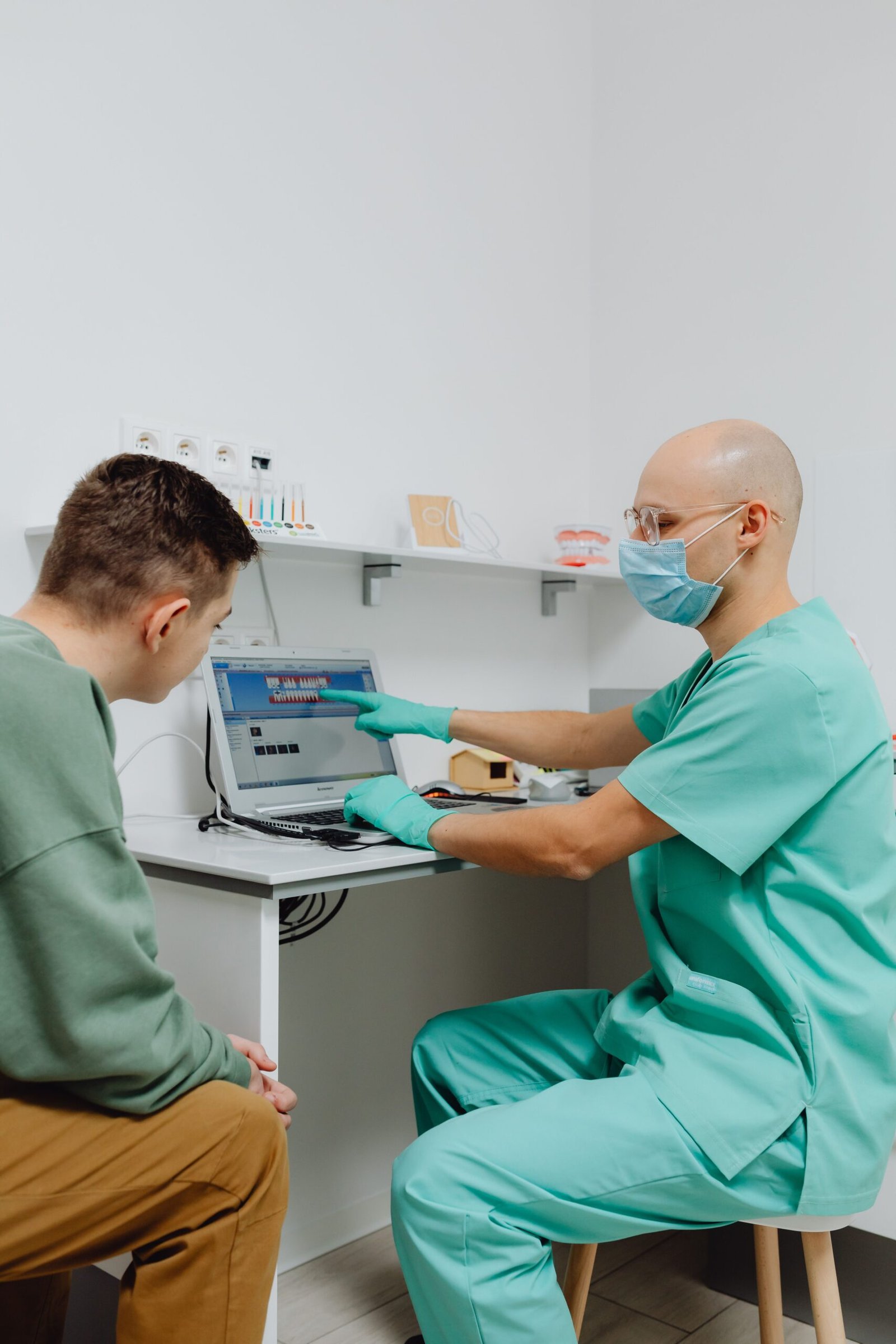
Use the Medical Directory first if you only know a dentist’s name or the clinic they work at. It lets you filter by specialty and facility to confirm the professional is genuinely registered and see their listed category. If a clinic can provide the specific license number, the registration status tool gives a direct, unambiguous answer: active or cancelled, nothing to interpret.
A dentist or clinic that hesitates to provide a license number, or can’t be found in the directory at all, is a legitimate reason to ask more questions before booking, not something to overlook because everything else about the visit felt professional.
When Should You See a Specialist Instead of a General Dentist?
Not every implant case belongs with a general dentist, even one holding the Implantology Privilege. Under DHA’s own scope-of-practice framework, advanced procedures like sinus lifts and major bone grafting are restricted specifically to oral surgeons, oral and maxillofacial surgeons, and periodontists (Dubai Health Authority, Dental Implantology Privilege Requirements circular, 2021). A general dentist with the privilege can place straightforward, single-site implants, but that’s a narrower scope than a full-arch or bone-deficient case requires.
What makes a case “complex” usually comes down to what a CBCT scan shows: insufficient bone height or width at the planned site, sinus proximity in the upper jaw, or multiple adjacent implant sites needing coordinated planning. This matters more, not less, for full-arch cases, where the margin for planning error compounds across every implant placed.
[PERSONAL EXPERIENCE] This distinction comes up naturally at consultation once a CBCT scan is reviewed. A patient with a straightforward single-site case and a patient needing a sinus lift are having two genuinely different conversations, even if both walked in asking about “getting an implant.”
What Should a Before-and-After Portfolio Actually Show You?
A genuinely useful portfolio shows cases similar to yours specifically, consistent photo angles and lighting across before and after shots, and follow-up images taken months later, not just a flattering final result photographed under ideal conditions. If you’re missing three teeth in a row, a portfolio full of single-tooth cases doesn’t tell you much about that dentist’s experience with your specific situation.
Red flags are usually easy to spot once you know to look. Stock-looking photos with no visible variety in patient age or case type, a portfolio with no timeline shown between before and after, or a clinic that can only show final results with no in-progress documentation, all suggest a curated highlight reel rather than a genuine case record. Isn’t a portfolio that only ever shows perfect outcomes a little suspicious on its own?
What Should a Revision or Warranty Policy Actually Specify?
A written policy should specify exactly what’s covered, fixture failure versus crown damage versus patient-caused issues, over what time window, and whether follow-up visits are included in the original price. A verbal assurance that “we’ll take care of you” isn’t a substitute for terms you can point back to later.
This matters even more for anyone considering treatment abroad. The two-trip reality of dental tourism means a revision months later often can’t happen at the original clinic without another flight, and hidden costs in cheap packages frequently trace back to exactly this gap, a low headline price with no clear written answer for what happens if something needs fixing.
[ORIGINAL DATA] We’re evaluating how to publish our own Implantology Privilege documentation and case logbook transparently, as a model of what any patient should feel comfortable asking to see, not as a claim that this transparency is unique in the Dubai market.
What Does the Technology Itself Tell You About a Clinic?
Technology claims matter, but only after credentials and licensing are confirmed, not as a substitute for them. A clinic can genuinely run a sophisticated digital workflow while the treating dentist still lacks the Implantology Privilege, and the reverse is also true. For the full breakdown of what to ask about guided surgery, in-house guide fabrication, and static versus dynamic navigation, see 7 Questions to Ask If Your Dentist Claims “Digital” Implants, which covers that layer in depth.
Think of it as a sequence, not a single checklist item. Confirm the credential first, then the specific case-fit, then the technology and portfolio, in roughly that order of importance.
Frequently Asked Questions
Does a DHA dental license mean a dentist is qualified to place implants?
No. A standard dental license authorizes general dentistry. Placing implants requires a separate DHA Implantology Privilege, involving supervised training and a minimum of 30 documented implant cases across at least 10 patients.
How do I check if a dentist in Dubai is actually licensed?
Use DHA’s free Sheryan portal. Search the Medical Directory by name, specialty, or facility, or check a specific license number directly through the registration status verification tool to confirm it’s active.
Should I see a specialist instead of a general dentist for my implant?
It depends on complexity. Straightforward, single-site cases can be handled by a general dentist holding the Implantology Privilege, but sinus lifts and major bone grafting are restricted to oral surgeons, oral and maxillofacial surgeons, and periodontists under DHA guidelines.
What should I ask to see before booking implant treatment?
Ask for a portfolio of cases similar to yours specifically, with consistent photo conditions and follow-up images, and a written revision or warranty policy stating exactly what’s covered and for how long.
Is JCI accreditation the same as being qualified to place implants personally?
No. JCI accreditation applies at the facility or hospital level. It says nothing about whether the specific dentist treating you personally holds an individual procedure credential like the DHA Implantology Privilege.
Conclusion
The single most important, least-asked question when choosing an implant dentist isn’t about technology or price. It’s whether this specific dentist holds the credential to place implants at all, and that’s verifiable in minutes through a free public portal before you ever sit in a chair.
Confirm the credential first, then evaluate case fit, portfolio, and written policies in that order. For the broader orientation this checklist fits into, see Dental Implants Explained: The Complete Patient Guide.
Sources
- Dubai Health Authority, Dental Implantology Privilege Requirements circular (CIR-2021-00000139), retrieved 2026-07-11, 2021 (Tier 1, official regulatory source)
- Dubai Health Authority, Sheryan professional registration verification service, retrieved 2026-07-11 (Tier 1, official government service)
- Dubai Health Authority, Sheryan Medical Directory, retrieved 2026-07-11 (Tier 1, official government service)
- Aggregated dental credentialing portal reporting on DHA Implantology Privilege Prometric exam format (150 questions, 3 hours, 65% pass mark), retrieved 2026-07-11, 2024 (Tier 3, secondary reporting on official DHA exam framework, not directly extracted from DHA’s primary circular text)
- Aggregated patient-facing guidance on before-and-after portfolio review and revision-policy best practice, retrieved 2026-07-11, 2025/2026 (Tier 4, consumer guidance, not a controlled study)