
A randomized trial directly comparing All-on-4 and All-on-6 found no statistically significant difference in implant failure rate, 1.25% versus 5% (p=.246), despite one approach having 50% more implants. If you’ve been told All-on-6 is simply the “upgraded” version, that finding might surprise you.
Most patients researching full-arch implants are shown a confident sales pitch, not the actual comparative evidence. This guide covers what All-on-4 and All-on-6 really are, how they differ (and don’t), long-term survival data, same-day loading timelines, honest candidacy factors, and Dubai cost context that doesn’t pretend to be more precise than it is.
Key Takeaways
- The only randomized trial comparing All-on-4 and All-on-6 found no statistically significant difference in implant failure, 1.25% versus 5% (p=.246).
- Long-term studies show implant survival between 92.5% and 98.9%, depending on arch and follow-up length.
- Same-day loading requires meeting a specific combined torque threshold, confirmed at surgery, not decided beforehand.
- No peer-reviewed source quantifies how many candidates need bone grafting or zygomatic implants instead, a genuine gap worth knowing about.
Table of Contents
- What Is All-on-4? What Is All-on-6?
- How Do All-on-4 and All-on-6 Actually Differ?
- How Long Do All-on-4 Implants Actually Last?
- Can You Get All-on-4 the Same Day as Surgery?
- Am I a Candidate for All-on-4 or All-on-6?
- What Does All-on-4 Cost in Dubai?
- Choosing Between All-on-4 and All-on-6 for Your Case
- Frequently Asked Questions
What Is All-on-4? What Is All-on-6?
All-on-4 uses four implants, two placed straight and two tilted 30 to 45 degrees toward the back of the jaw, to support a full fixed bridge of up to 12 teeth. The tilt isn’t cosmetic. It’s engineered specifically to maximize contact with existing bone, avoiding the sinus or nerve without grafting in most cases.

All-on-6 adds two more implants, usually placed between the anterior and posterior positions. The theoretical benefit is redundancy: if one implant out of six fails, five remain to absorb the load, versus three out of four. Across broader implant success data, a 2025 clinical review of 158,824 implants found a 97.83% overall clinical success rate (PMC12843187), the baseline both approaches are measured against.
For the guided digital workflow behind precise implant placement, see Digital Dental Implants in Dubai.
How Do All-on-4 and All-on-6 Actually Differ?
Here’s where the marketing narrative and the evidence diverge. The only randomized trial directly comparing the two found implant failure in 1.25% of All-on-4 implants (1 of 80) versus 5% of All-on-6 implants (6 of 120), a difference that was not statistically significant (p=.246). Bone loss was also statistically similar between groups, 1.71mm versus 1.51mm (p=.12).
[UNIQUE INSIGHT] Nearly every clinic page frames All-on-6 as a strict upgrade, more implants, more support, automatically safer. The actual RCT evidence doesn’t support that as a blanket claim. Redundancy remains a real theoretical advantage on paper, it just isn’t one this trial could statistically confirm. That distinction matters when you’re being sold on a number rather than a plan.
Worth noting honestly: this is a single trial with a relatively small sample, 40 patients. It’s the best comparative evidence available, not the final word. A 2025 multicenter trial revisiting this exact question exists but remains behind a paywall at the time of writing.
How Long Do All-on-4 Implants Actually Last?
Long-term studies show implant-level survival between 92.5% and 98.9%, depending on arch and follow-up length. A Japanese cohort followed for 3 to 17 years found maxillary implant survival of 97.4% and mandibular survival of 98.9% (Springer IJID, International Journal of Implant Dentistry, 2023).
Here’s a distinction most patient content skips entirely: implant survival and prosthesis survival are tracked separately, because they fail differently. A 10-year mandibular All-on-4 study found 93.8% patient-level implant survival, but 99.2% prosthesis survival (PubMed 21357865). The bridge itself, chipping, screw loosening, material wear, tends to outlast the implants underneath it, or at least fails for entirely different reasons.
Can You Get All-on-4 the Same Day as Surgery?
Same-day loading for a full arch requires each implant to reach a minimum insertion torque, commonly cited around 30 to 32 Ncm individually, plus a combined threshold of roughly 120 Ncm across four implants (PMC10092009, Journal of Clinical Periodontology, 2023). That torque gets confirmed during surgery itself, not promised in advance.
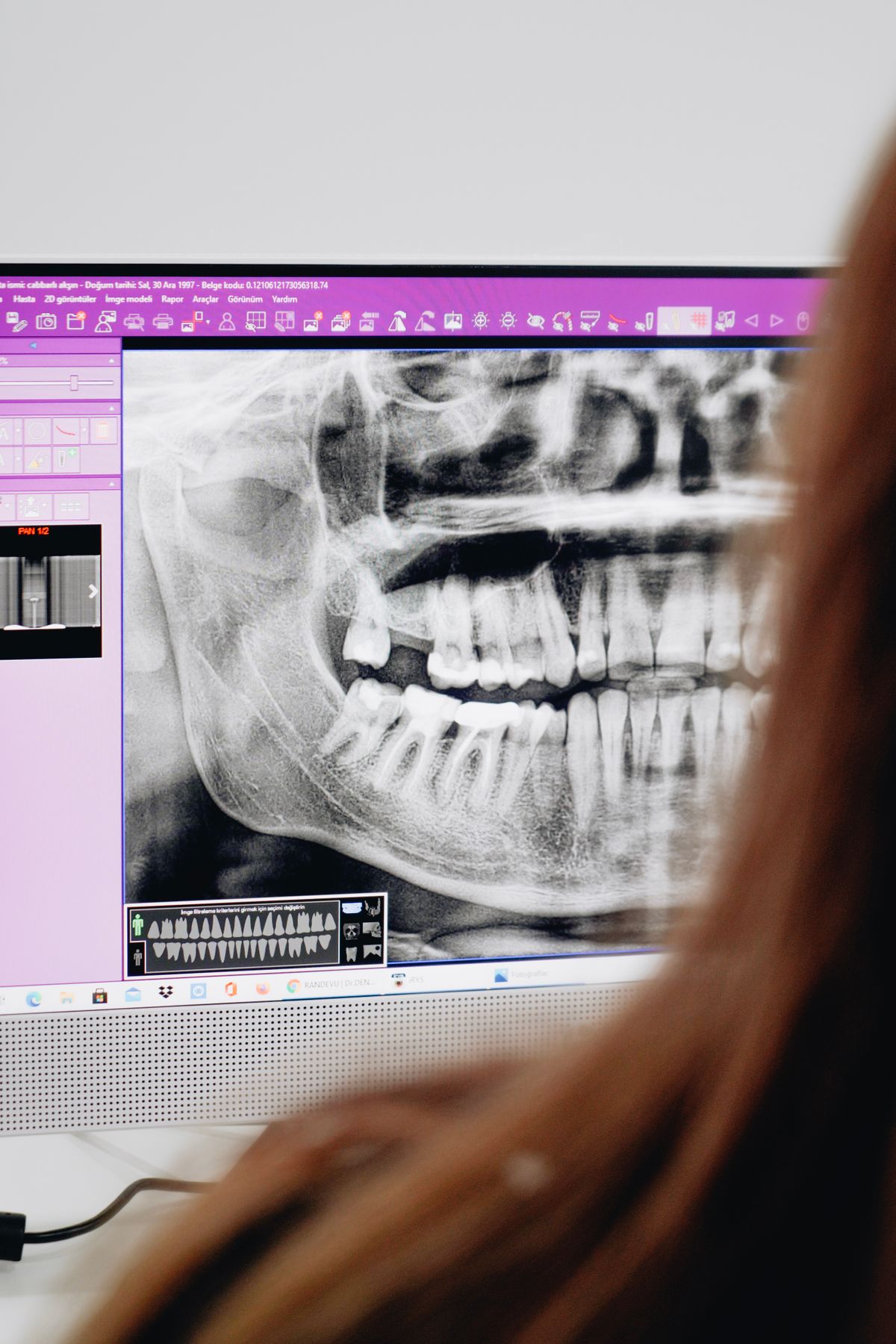
This is a meaningfully higher bar than single-tooth immediate loading. A full arch puts more combined biomechanical load on fewer initial contact points, which is exactly why the threshold is measured both per-implant and across the whole arch. Recent evidence suggests splinted implants, locked together by the rigid bridge, may tolerate somewhat lower individual torque safely, since the load gets shared across all four.
For the scan behind every full-arch treatment plan, see What Is a CBCT Scan, and Why Does It Matter for Implants?
Am I a Candidate for All-on-4 or All-on-6?
Candidacy comes down primarily to available bone volume, assessed via CBCT scan. Severe atrophy sometimes requires bone grafting or, in more extreme cases, zygomatic implants anchored in the cheekbone instead of the jaw itself.
Here’s an honest gap worth flagging: no peer-reviewed source we found quantifies what share of All-on-4 candidates actually end up needing grafting or a zygomatic alternative. That’s a real limitation in the published evidence, not something worth guessing a percentage for just to sound more authoritative. What is consistent across every source reviewed is that CBCT scanning is the universal standard for determining candidacy, not a panoramic X-ray, not a visual exam alone.
[PERSONAL EXPERIENCE] We don’t default to one configuration. The decision between All-on-4 and All-on-6 gets made after the CBCT scan, based on your specific bone volume and arch anatomy, not a standard recommendation applied to every patient who walks in.
A few other factors shape candidacy beyond bone volume alone. Uncontrolled diabetes and heavy smoking both carry documented, elevated risk for implant complications generally, not specific to full-arch cases, but relevant here too. Age itself isn’t a disqualifier. What matters more is bone quality and overall healing capacity, which vary considerably between patients of the same age. A thorough consultation should walk through each of these factors individually, not treat candidacy as a single yes-or-no gate.
What Does All-on-4 Cost in Dubai?
Published Dubai clinic pricing for a full-arch All-on-4 restoration ranges roughly AED 15,000 to 90,000 per arch. That’s a wide spread, reflecting differences in implant brand, material, and whether grafting is needed, not a single standard price you should expect to be quoted.
Worth being direct about this: no independent, non-clinic-marketing pricing data exists for Dubai specifically, everything circulating is published by clinics themselves, including this range. The same caution applies to any Turkey or overseas cost comparisons you’ll find online. Treat those as directional at best, not verified fact, until a clinic gives you an actual itemized quote for your specific case.
Choosing Between All-on-4 and All-on-6 for Your Case
Since the direct comparative evidence shows no statistically significant outcome difference between the two, the right choice depends on your specific bone volume, arch anatomy, and your surgeon’s assessment. Not on a default assumption that more implants automatically means a better result.
Isn’t that a more useful way to frame the decision than “which one is better”? The honest answer is: it depends on your CBCT scan, not on a marketing tier.
A few practical factors tend to tip the decision in real cases. Where bone volume is genuinely marginal in specific spots along the arch, an extra implant or two can provide more flexible placement options, not because six is inherently safer, but because it gives the surgeon more positions to work with. Where the maxilla and mandible differ in density, as they often do, the configuration might reasonably differ between your upper and lower arch. Budget is a legitimate factor too, All-on-6 costs more, and given the trial data above, that added cost isn’t automatically buying a statistically better outcome. None of this replaces an actual CBCT-based consultation, but it’s the kind of reasoning that should be explained to you, not skipped in favor of a default recommendation.
Frequently Asked Questions
How many teeth are on All-on-4?
Typically up to 12 teeth per arch, supported by four implants, two placed straight and two tilted toward the back of the jaw.
Is All-on-4 permanent, or does it need replacement?
The implants themselves are intended to be permanent, though the prosthetic bridge on top may need maintenance or eventual replacement due to material wear, separate from implant survival.
How painful is All-on-4 recovery, and how long does it take?
Recovery involves swelling and discomfort typical of oral surgery in the first several days. Specific pain-timeline expectations should be confirmed with your surgeon for your case.
All-on-4 vs. All-on-6: what’s the cost difference?
All-on-6 typically costs more due to the additional implants, though the one randomized trial comparing outcomes found no statistically significant difference in failure rate between the two approaches.
Can I get All-on-4 if I have severe bone loss?
Sometimes. Severe atrophy may require bone grafting or zygomatic implants instead. A CBCT scan is needed to determine candidacy specifically for your case.
How long do All-on-4 implants actually last?
Long-term studies show implant survival between roughly 92% and 99% depending on arch and follow-up length, with some cohorts followed as long as 17 years.
Conclusion
All-on-4 and All-on-6 are both well-supported options with strong long-term survival data. The choice between them is a case-specific clinical decision, not a simple “more is better” upgrade, the only trial that’s actually tested the assumption didn’t find a significant difference.
Get a CBCT-based assessment before assuming which configuration fits your case. That scan, not a clinic’s default recommendation, is what should decide it.
Continue Learning
Fundamentals:
- All-on-4 vs. All-on-6: The Real Difference, Backed by Data
- Am I a Candidate for All-on-4? What Actually Disqualifies You
How-To Guides:
- Same-Day Teeth in Dubai: What Actually Happens, and When
- Recovering From All-on-4: Your Week-by-Week Aftercare Guide
Cost & Comparison:
- All-on-4 Cost in Dubai: What’s Actually in the Price
- All-on-4 vs. Dentures: What the Data Actually Shows
Case Study:
For the digital planning technology behind full-arch cases, see Digital Dental Implants in Dubai.
Sources
- PMC, Clinical Success Rates of Dental Implants: A Review of 158,824 Implants, retrieved 2026-07-10, 2025
- PMC, The All-on-4 Concept: A Systematic Review, Journal of Clinical and Experimental Dentistry, retrieved 2026-07-10, 2017
- Springer, Long-Term Survival of All-on-4 Implants: 3-17 Year Follow-Up, International Journal of Implant Dentistry, retrieved 2026-07-10, 2023
- PubMed, Mandibular All-on-4: 10-Year Outcomes, retrieved 2026-07-10
- Prosthesis Journal, 12-Year Retrospective Analysis of Full-Arch Implant Survival, retrieved 2026-07-10
- PubMed, All-on-4 vs. All-on-6: A Randomized Comparative Trial, Clinical Implant Dentistry and Related Research, retrieved 2026-07-10, 2016
- PMC, Immediate Loading Torque Thresholds for Full-Arch Implants: A Meta-Analysis, Journal of Clinical Periodontology, retrieved 2026-07-10, 2023