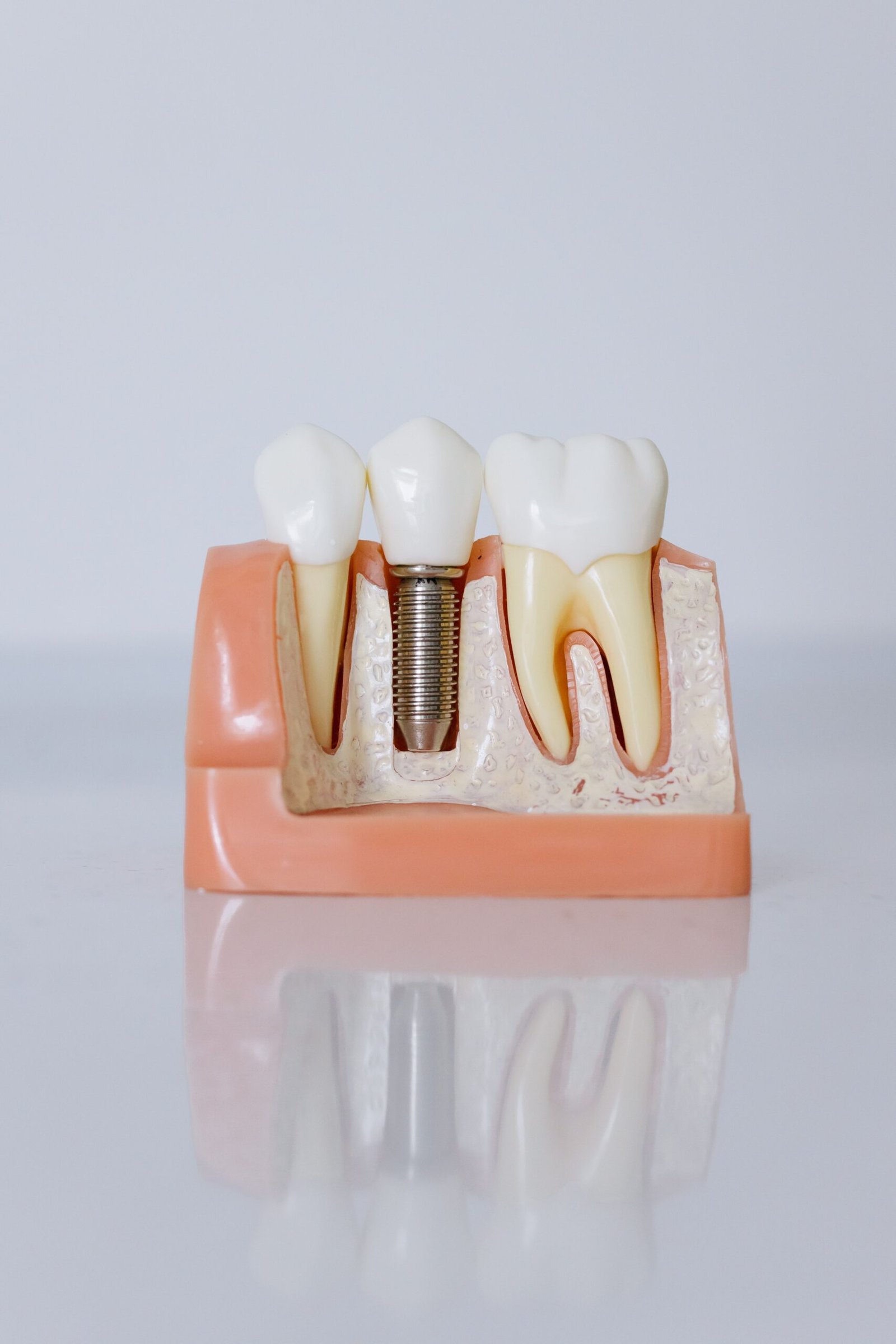
Replacing 3 to 4 consecutive missing teeth may only require 2 strategically placed implants supporting a bridge, not one implant for every gap. Most patients assume the math is one-to-one, one implant per missing tooth, and that assumption alone can double the number of surgical sites a case actually needs.
“Multiple teeth” also gets treated as either a stack of single-tooth cases or a scaled-down version of full-arch treatment, when it’s genuinely its own decision. This guide covers individual implants versus an implant-supported bridge, the real survival data behind each, and how to know which fits a specific gap.
Key Takeaways Replacing 3 to 4 consecutive missing teeth may only need 2 implants supporting a bridge, not one per tooth. A systematic review of 3,682 implants found splinted, bridge-connected restorations showed 99.1% survival versus 96.5% for individual, non-splinted implants over a mean 87.8-month follow-up. A separate 2025 review found non-splinted implants had significantly more mechanical complications. The right approach depends on tooth location and bone volume, not a fixed rule.
Quick-Answer Comparison
| Factor | Individual Implants | Implant-Supported Bridge |
|---|---|---|
| Implants needed for 3 missing teeth | Typically 3 (one per tooth) | Often 2, spanning the gap |
| Survival data | 96.5% at a mean 87.8-month follow-up | 99.1% at the same follow-up (splinted) |
| Mechanical complications | Higher, per a 2025 systematic review | Lower |
| Hygiene access | Floss threads under each crown independently | Requires a floss threader or water flosser under the connected span |
| Best fit | Non-adjacent gaps, isolated missing teeth | Consecutive missing teeth in a row |
For the itemized breakdown of what a single implant fixture actually costs, see Single Tooth Implant Cost Breakdown: Fixture, Abutment & Crown Explained, which this comparison builds on rather than repeats.
Do You Need a Separate Implant for Every Missing Tooth?
Not necessarily. Replacing 3 to 4 consecutive missing teeth may only require 2 strategically placed implants supporting a fixed bridge that spans the gap, rather than one implant per missing tooth. [UNIQUE INSIGHT] This efficiency point rarely gets explained clearly, and it changes both the surgical complexity and the total cost of a case.
The logic is structural. Two implants placed at the ends of a 3 or 4-tooth gap can carry a connected bridge across the missing teeth in between, the same way two support posts can carry a beam without a post under every foot of it. Bone quality and the width of the gap both factor into how many implants a specific span can safely support.

Individual implants still make more sense in specific situations: non-adjacent gaps with healthy teeth in between, a patient who wants independent hygiene access at every site, or a case where preserving bone at each individual socket matters more than reducing the implant count. Isn’t it worth asking which of those actually applies before assuming more implants means a stronger result?
Does Splinting Implants Together Actually Change Survival?
Yes, and the direction is counterintuitive. A 2022 systematic review and meta-analysis in the Journal of Indian Prosthodontic Society pooled 3,682 implants across 2,099 patients (Shah et al., Journal of Indian Prosthodontic Society, 2022) and found splinted, bridge-connected restorations showed 99.1% survival versus 96.5% for non-splinted individual implants, over a mean follow-up of 87.8 months. [UNIQUE INSIGHT] That runs against the intuitive assumption that separate, independent implants mean more redundancy and safety.
A separate 2025 systematic review in the Journal of Prosthetic Dentistry, pooling 2,085 implants across 1,027 patients (Pascoal et al., Journal of Prosthetic Dentistry, February 2025), found no statistical difference in biological complications between the two approaches, but non-splinted implants showed significantly more mechanical complications, at roughly a 63% lower relative risk for splinted restorations (RR 0.37, P<.001). Splinting one implant to another appears to distribute chewing forces more evenly, reducing the mechanical strain on any single fixture.

The bone loss picture is more mixed. The 2022 review found splinted restorations lost statistically less marginal bone than non-splinted ones, though the researchers themselves flagged the difference as too small to be clinically meaningful. Neither review found splinting to be a downside; at worst, it’s a wash on bone loss and a genuine advantage on survival and mechanical durability.
[CITATION CAPSULE] Splinted, bridge-connected implant restorations showed 99.1% survival versus 96.5% for non-splinted individual implants across a pooled analysis of 3,682 implants and 2,099 patients over a mean 87.8-month follow-up (Shah et al., Journal of Indian Prosthodontic Society, 2022). Non-splinted implants also carried a significantly higher risk of mechanical complications in a separate 2025 review.
How Does Cost Actually Compare for Multiple Missing Teeth?
Individual implants for 3 missing teeth mean paying for 3 separate fixtures, each with its own surgical placement and its own crown, while a bridge on 2 implants covering the same gap needs one fewer fixture and one connected prosthetic instead of 3 separate ones. That’s a materially different cost structure than either the single-tooth pricing or the full-arch pricing already covered on this site, and it shouldn’t be confused with either.
The fixture and abutment cost per implant follows the same brand and material tiers already covered in the single-tooth breakdown, premium, mid-tier, or value. The savings from a bridge approach come from needing one fewer implant placement and from the bridge prosthetic itself typically costing less than 3 separately fabricated crowns, though the exact total still depends on brand tier, bone grafting needs at each site, and the lab fabricating the bridge. No independent published study gives a single controlled total for this specific scenario, this is directional, cross-referenced guidance, not a fixed quote.
What Actually Determines Which Approach Fits Your Case?
Tooth location, bone volume at each individual site, and whether the gap sits in a highly visible area matter more than any fixed one-implant-per-tooth rule. Consecutive gaps with adequate bone at the two end positions are the strongest candidates for a bridge; spread-out or non-adjacent missing teeth almost always need their own implants regardless of the survival data above.
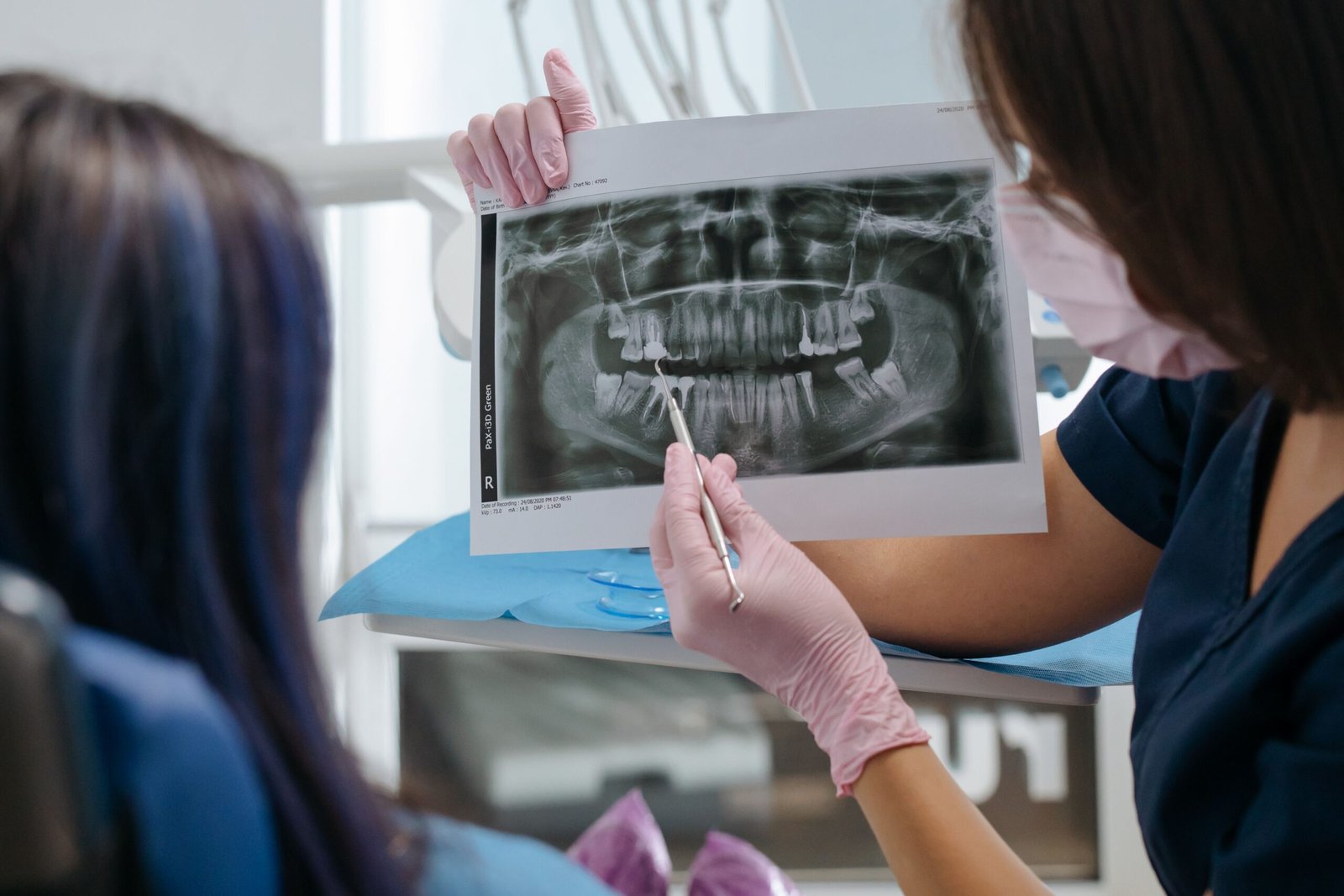
[PERSONAL EXPERIENCE] When this comes up at consultation for a patient missing several teeth, the conversation usually isn’t “how many implants,” it’s “what does the bone at each site actually look like.” A CBCT scan that shows adequate bone volume at two end positions changes the recommendation completely from a scan that shows a thin ridge needing support at every site.
[ORIGINAL DATA] We’re tracking, in general terms, our own individual-versus-bridge case mix for patients missing multiple but not all teeth, without publishing a specific figure until that data is properly documented over a larger patient base.
How Is This Different From Full-Arch Treatment?
This comparison covers 2 to 4 missing teeth, not a full arch. Once most or all of the teeth in a jaw are gone, the calculation shifts entirely to fixed-arch prosthetics on 4 to 6 implants, a different clinical question with its own extensive body of data already covered in All-on-4 and All-on-6 Dental Implants in Dubai.
The practical line sits around how many natural teeth remain in the arch and whether they’re healthy enough to keep. A patient missing 4 consecutive teeth with a full set of healthy teeth everywhere else is a multiple-teeth case; a patient with failing teeth throughout the arch is typically a full-arch case, even if the exact tooth count looks similar on paper.
Frequently Asked Questions
Do I need an implant for every missing tooth?
Not necessarily. Replacing 3 to 4 consecutive missing teeth may only need 2 implants supporting a connected bridge, rather than one implant per tooth, depending on bone volume and gap location.
How many implants do I need for 3 missing teeth?
Often 2, if the gap is consecutive and bone volume at the two end positions is adequate. Non-adjacent missing teeth typically still need their own individual implants regardless of the total count.
Is an implant-supported bridge as strong as individual implants?
A 2022 systematic review of 3,682 implants found splinted, bridge-connected restorations showed 99.1% survival versus 96.5% for individual, non-splinted implants over a mean 87.8-month follow-up, so the bridge approach isn’t a compromise on strength.
Is it cheaper to get individual implants or a bridge for multiple missing teeth?
An implant-supported bridge typically needs one fewer fixture than individual implants for the same gap, which usually lowers the total cost, though the exact figure depends on brand tier and bone grafting needs at each site.
At what point does “multiple teeth” become “full arch” treatment?
Roughly when most or all of the teeth in a jaw are missing or failing, not at a specific tooth count. A few consecutive missing teeth with otherwise healthy teeth remaining is a multiple-teeth case, not a full-arch one.
Conclusion
Multiple missing teeth isn’t just several single-tooth cases stacked together, or a scaled-down full-arch case. It’s its own decision between individual implants and a bridge on fewer implants, and the survival data leans toward the bridge approach in many consecutive-gap scenarios.
A CBCT-based evaluation of bone volume at each site is the clearest way to know which approach actually fits a specific gap. For the broader orientation this comparison fits into, see Dental Implants Explained: The Complete Patient Guide.
Sources
- Shah AH, Patel P, Trivedi A, Shah A, Desai N, Talati M, A comparison of marginal bone loss, survival rate, and prosthetic complications in implant-supported splinted and nonsplinted restorations: A systematic review and meta-analysis, Journal of Indian Prosthodontic Society, retrieved 2026-07-11, 2022 (Tier 1, peer-reviewed systematic review and meta-analysis)
- Pascoal ALB, Paiva KRG, Marinho LCN, Bezerra AS, Calderon PDS, Impact of splinting implant-supported crowns on the performance of adjacent posterior implants: A systematic review and meta-analysis, Journal of Prosthetic Dentistry, retrieved 2026-07-11, February 2025 (Tier 1, peer-reviewed systematic review and meta-analysis)
- Aggregated clinical guidance on implant-supported bridges for multiple missing teeth, retrieved 2026-07-11, 2025/2026 (Tier 4, clinical consensus, not a single controlled study)
- Aggregated cost guidance applying single-implant fixture pricing tiers to a multiple-tooth bridge scenario, cross-referenced from this site’s Single Tooth Implant Cost Breakdown, retrieved 2026-07-11 (Tier 4, directional only)