A 2024 study of 907 implant crowns, followed for up to 12 years, found lab-fabricated crowns failed markedly less often than chairside-milled ones by the 5-year mark. That sounds like bad news for same-day crowns. It isn’t, once you look at why.
A 2025 trial explains the gap almost entirely: it comes down to which ceramic material actually gets milled, not whether the crown was made chairside or in an outside lab. This guide covers what the data shows, which materials hold up, and the difference between a same-day crown and an implant placed and restored on the very same day, a distinction most marketing pages blur on purpose.
Key Takeaways
- Lab-fabricated implant crowns showed a markedly lower 5-year failure rate than chairside crowns overall (PubMed 39322444, 2024).
- A 2025 trial found lithium disilicate chairside crowns reached 100% five-year survival, while hybrid ceramic crowns survived only 31% of the time.
- “Same-day crown” and “same-day implant” are two different things. Confusing them leads to the wrong expectations.
What Does the Data Say About Chairside vs. Lab-Fabricated Implant Crowns?
A multi-center cohort study of 567 patients and 907 implant crowns, tracked for up to 12 years, found lab-fabricated crowns had a substantially lower 5-year failure rate than chairside-fabricated ones (95% CI 0.0-0.7, p=0.038). The overall annual failure rate across all crowns was 0.74%.
What actually failed? Mostly decementation, followed by ceramic fracture and titanium-base fracture, the kind of mechanical failures tied to material and fit rather than the implant itself. Does this mean same-day crowns are a worse choice? Not exactly. It means the material milled matters more than the label “chairside,” which is exactly what the next study found.
For the implant placement that comes before any crown, see 3D Guided Implant Surgery: How Surgical Guides Improve Accuracy.
Which Ceramic Material Actually Performs Best for a Same-Day Implant Crown?
A 2025 multicenter randomized trial of 90 chairside-milled implant crowns across 7 sites found lithium disilicate reached 100% five-year survival, versus 93.3% for PFM crowns and just 31% for hybrid ceramic crowns (PubMed 40582923, Dental Materials, 2025). That’s not a small gap. It’s the difference between a crown that lasts and one that doesn’t.
Hybrid ceramic crowns failed mostly through partial debonding, a problem serious enough that the study’s own authors recommended against using the material for implant crowns at all. That’s a rare, useful disclosure. Most “same-day crown” pages talk about the technology, not the specific ceramic block loaded into the milling unit that day.
[UNIQUE INSIGHT] We default to lithium disilicate for chairside implant crowns specifically because of this data, not as a generic “premium material” upsell. When a clinic can’t tell you which ceramic they mill, that’s worth asking about directly.
How Accurate Is a Digital Impression for an Implant Crown?
For a single implant, conventional impressions actually achieved tighter precision (32.7±11.6 μm) than digital scanning (57.2-176.7 μm depending on the scanner system used) (PMC10700249, International Journal of Implant Dentistry, 2023). That’s a counterintuitive finding for a technology often marketed as strictly more accurate.
The picture shifts with span length. Digital accuracy for a full-arch scan runs 162-226 μm, noticeably wider than the single-implant range. Isn’t it worth asking which scenario you’re actually in before assuming “digital” automatically means “more precise”? Despite these differences, 12-month marginal bone loss showed no significant difference between impression methods at all (0.03mm difference, p=0.55).
For the scan that plans implant position before any crown work begins, see What Is a CBCT Scan, and Why Does It Matter for Implants?
Is a Same-Day Crown the Same as an Immediate-Load Implant?
No, and conflating the two sets the wrong expectations. A same-day crown placed months after surgery on an already-integrated implant is a routine, lower-risk appointment. An immediate-load crown, placed within 24 to 48 hours of surgery, before osseointegration has happened, is a distinct decision made only when implant stability allows it, confirmed during surgery itself.
A 2025 umbrella review of 24 systematic reviews covering 8,063 patients found immediate-load survival (92-97.8%) was statistically comparable to standard-timing survival (95-99%), though immediate loading showed slightly higher first-year bone loss (PMC12599652, Dental Research Journal, 2025).
[PERSONAL EXPERIENCE] Patients often book a “same-day crown” consultation expecting to walk out with a finished tooth on the day of surgery. Setting that expectation correctly at the first visit, before anyone commits to a plan, avoids a disappointing conversation later.
What to Expect During a Same-Day Crown Appointment
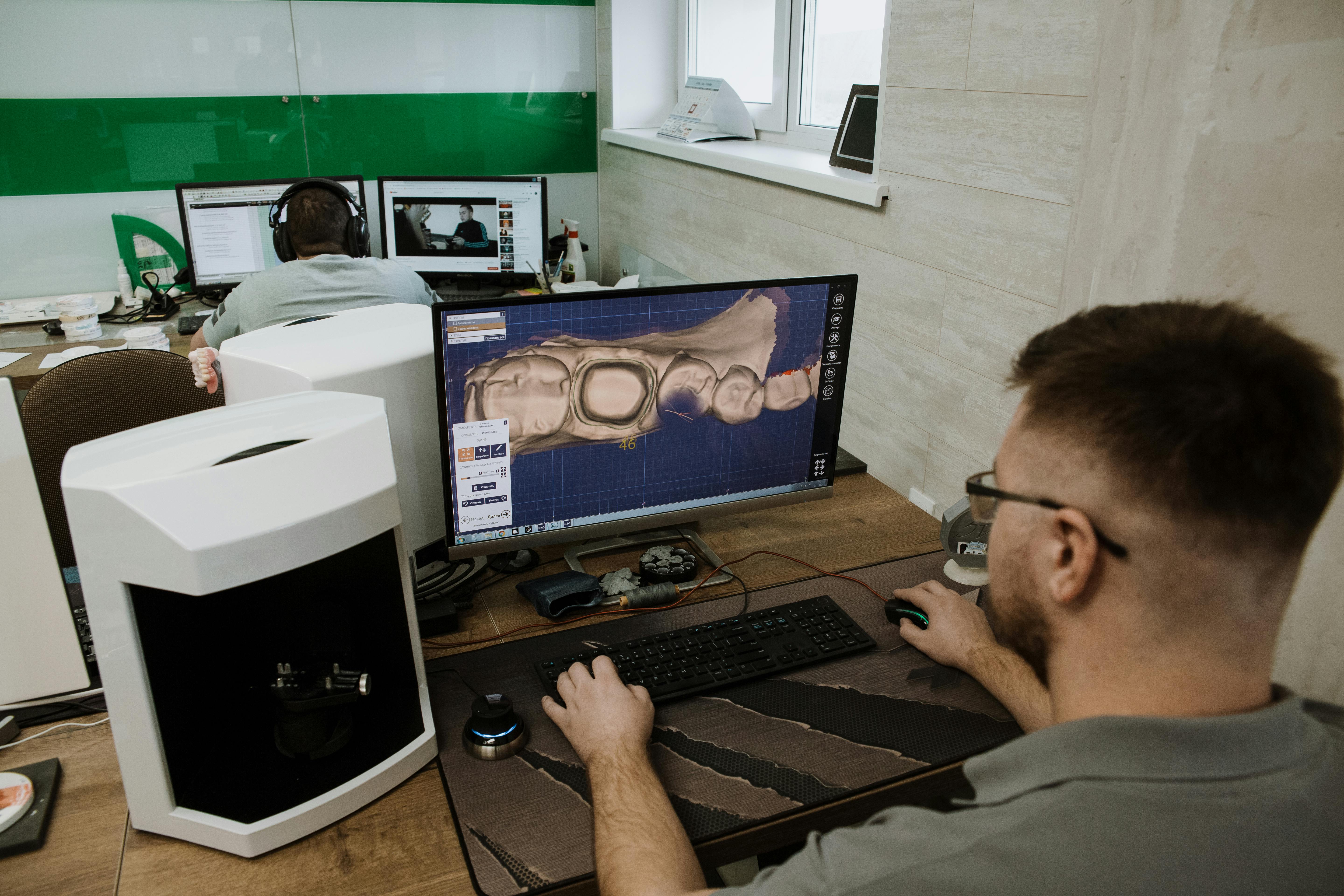
A same-day appointment on an already-integrated implant involves a digital scan of the implant position, chairside design, and milling, completed in one visit of roughly 90 minutes to 2 hours. The scan replaces the putty impression, and the crown is designed and milled while you wait rather than sent to an outside lab.
[ORIGINAL DATA] We’re building toward tracking our own chairside implant-crown outcomes by material over time, the same way the studies above did, rather than relying only on published data indefinitely.
For how in-house milling shortens this appointment further, see In-House 3D Printing: Why It Speeds Up Implant Treatment.
Frequently Asked Questions
How long does a CEREC crown on a dental implant last?
It depends heavily on material. A 2025 trial found lithium disilicate chairside crowns reached 100% five-year survival, while hybrid ceramic crowns survived only 31% of the time over the same period.
Can you get a crown the same day as implant surgery?
Only in specific cases, known as immediate loading, decided by implant stability at the time of surgery rather than planned in advance. A standard same-day CEREC crown is usually done months later, once the implant has integrated.
Is a CEREC crown as strong as a lab crown for implants?
It depends on the material milled. Lithium disilicate performed comparably to lab crowns in study data, while hybrid ceramic performed markedly worse, so material choice matters more than whether the crown was made chairside or in a lab.
What ceramic material is best for a CEREC implant crown?
Lithium disilicate has the strongest published survival data for chairside implant crowns, reaching 100% at 5 years in one trial, notably outperforming hybrid ceramic materials in the same study.
Does a digital impression work as well as a traditional impression for an implant crown?
For a single implant, traditional impressions showed slightly tighter precision in one review, though clinical outcomes like bone loss showed no significant difference between methods at 12 months.
[INTERNAL-LINK: candidacy and eligibility for implant treatment overall → Am I a Good Candidate for Dental Implants? full eligibility guide]
Conclusion
“Same-day crown” isn’t automatically equal to “lab crown,” and the material milled, not the label chairside, is what decides whether it performs as well. Lithium disilicate has the survival data to back same-day convenience. Hybrid ceramic, in the same study, does not.
Before agreeing to a same-day crown, ask two specific questions: which ceramic material will be milled, and whether this is an immediate-load scenario or a standard-timing one. Those two answers matter more than the word “digital” ever will.
For the complete digital implant workflow, see Digital Dental Implants in Dubai.
Sources
- PMC / PubMed, Longevity and Risk Factors of CAD-CAM Implant-Supported All-Ceramic Crowns, Dental Materials, retrieved 2026-07-08, 2024
- PubMed, Multicenter RCT: 5-Year Survival of Chairside Hybrid Abutment Crowns, Dental Materials, retrieved 2026-07-08, 2025
- PMC, Accuracy of Digital Implant Impressions: A Systematic Review, International Journal of Implant Dentistry, retrieved 2026-07-08, 2023
- PMC, Immediate vs. Non-Immediate Loading of Dental Implants: An Umbrella Review, Dental Research Journal, retrieved 2026-07-08, 2025