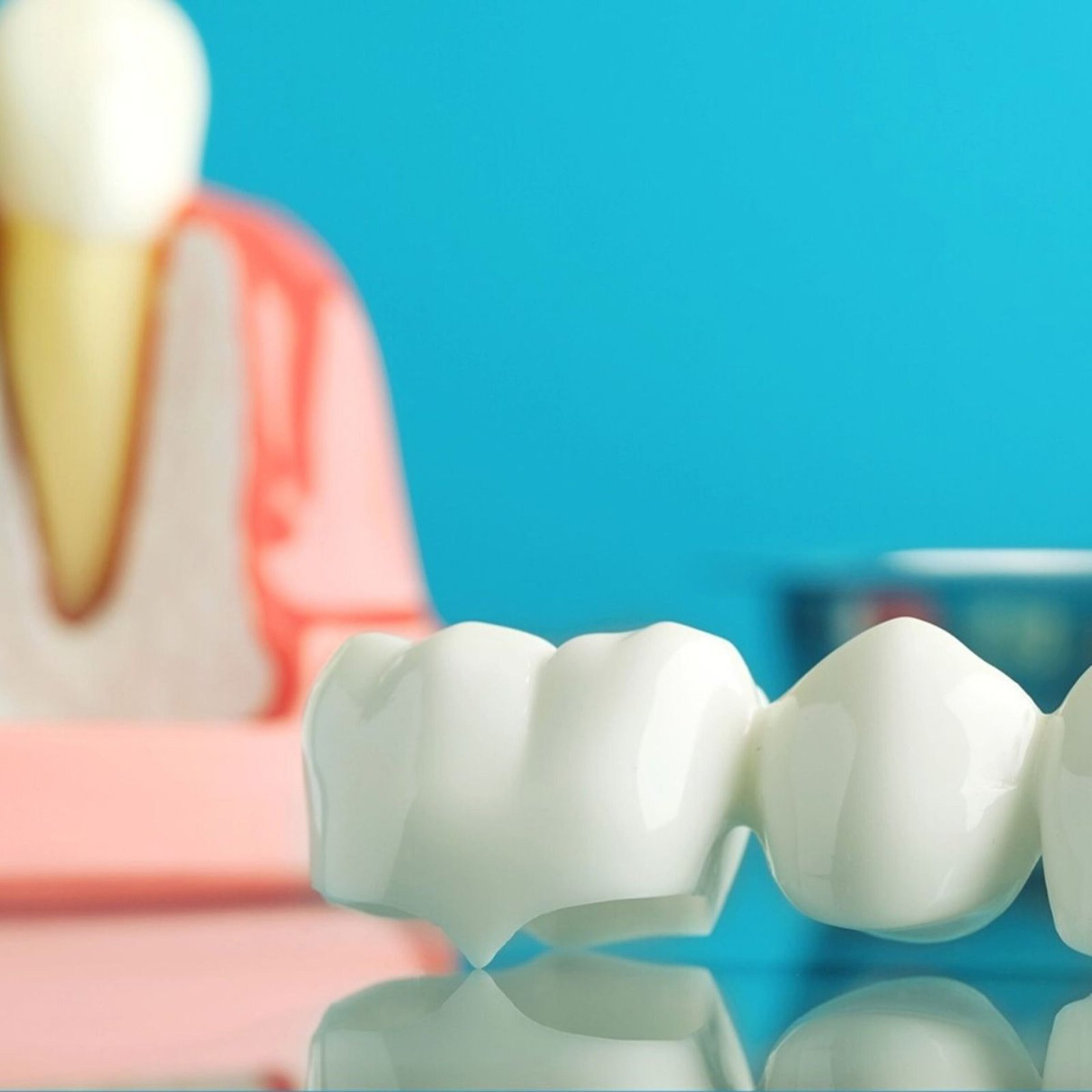
In 2021, a systematic review and meta-analysis of 49 studies estimated that implant-supported crowns made of monolithic zirconia had a 3-year survival of 96.1%. That was statistically no different from veneered zirconia (96.3%) or from glass-ceramic crowns (97.0 to 97.6%) (Pjetursson et al., Clinical Oral Implants Research, 2021). Zirconia is strong, but it isn’t uniquely strong.
“Zirconia crowns” draws about 720 searches a month in Dubai, and the usual answer is that they’re strong, white, and metal-free. The research is more mixed than that. Zirconia has two quite different forms, the evidence for tooth-supported crowns is shorter than most people assume, and a few drawbacks rarely make it into a price list. This guide covers what the studies measured, where zirconia chips or wears, and what to ask before choosing it.
Key Takeaways A 2021 meta-analysis of 49 studies found no significant survival difference between monolithic zirconia (96.1% at 3 years), veneered zirconia, and glass-ceramic implant crowns, but veneered crowns chipped 1.65% a year against 0.39% for monolithic. Tooth-supported monolithic zirconia has only about one year of average follow-up. Zirconia wears opposing enamel like or more than natural teeth.
How Strong Are Zirconia Crowns in Clinical Studies?
Strong enough to match other ceramic crowns, with a few caveats. The 2021 meta-analysis estimated 3-year survival at 96.1% for monolithic zirconia (95% CI 93.4 to 97.8%), 96.3% for veneered zirconia, 97.0% for monolithic reinforced glass-ceramic, and 97.6% for veneered glass-ceramic. Except for resin-matrix ceramic crowns, differences between materials weren’t statistically significant (Pjetursson et al., Clinical Oral Implants Research, 2021).
Two details matter here. These crowns sat on implants, not natural teeth, so the numbers are best read as a materials comparison and not a promise for any single crown. And the studies lasted only a few years. The review itself describes the results as short-term.
Material fracture is where zirconia has shown a real weakness. A 2018 systematic review of 35 studies on implant-supported single crowns found 5-year survival of 97.6% for zirconia-ceramic crowns against 98.3% for metal-ceramic. Yet material fractures were significantly more common with zirconia, at 2.1% against 0.2% (p = 0.001), while veneering ceramic chipping was similar at 2.8% and 2.9% (Pjetursson et al., Clinical Oral Implants Research, 2018).
[CITATION CAPSULE] A 2018 systematic review of 35 studies on implant-supported single crowns found zirconia-ceramic crowns survived at a similar rate to metal-ceramic crowns over 5 years (97.6% against 98.3%), with similar chipping, but material fractures were significantly more frequent with zirconia (2.1% against 0.2%) (Pjetursson et al., Clinical Oral Implants Research, 2018).
What’s the Difference Between Veneered and Monolithic Zirconia?
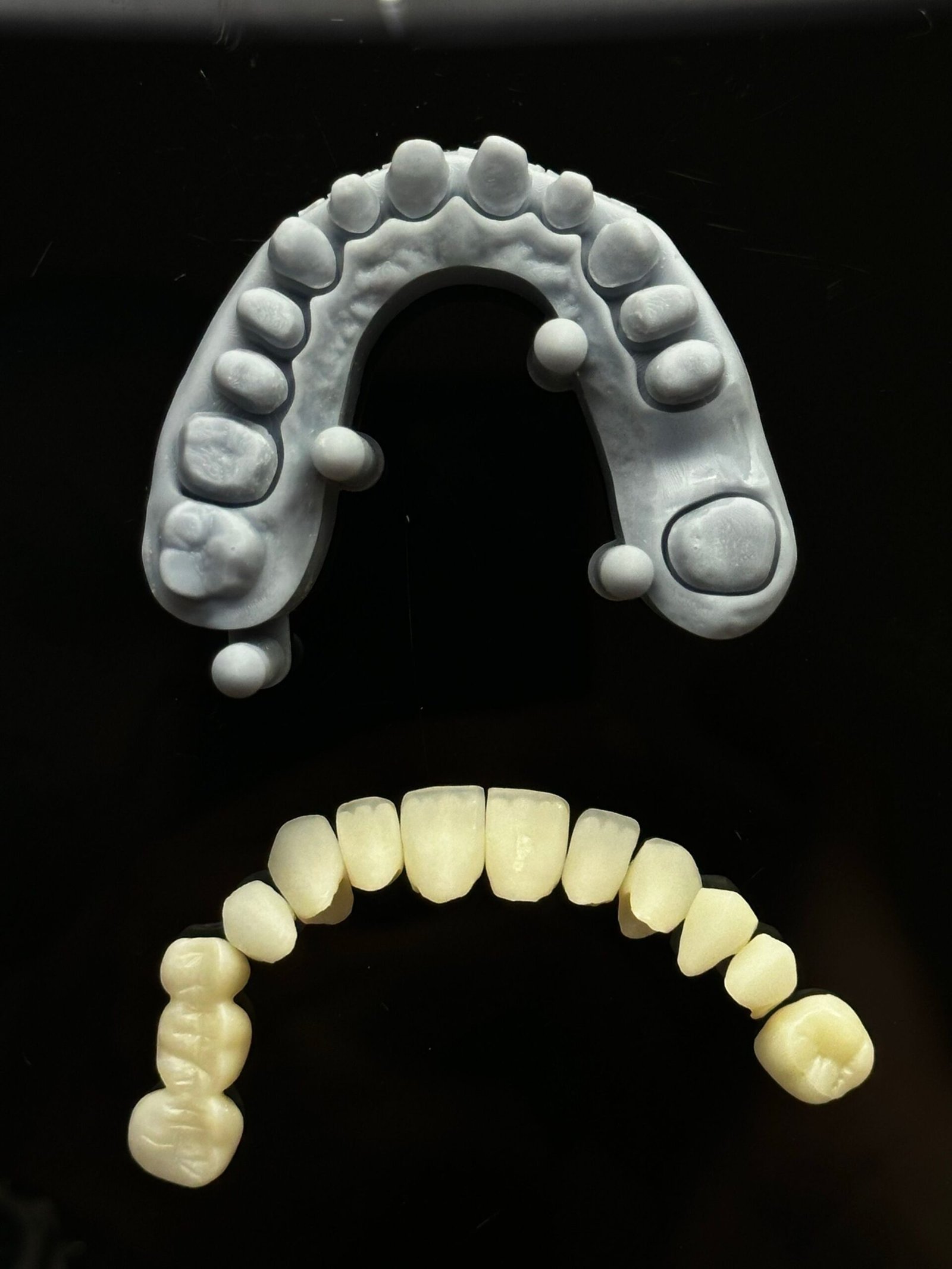
Veneered zirconia has a zirconia core with porcelain layered on top, and monolithic zirconia is solid zirconia all the way through. The difference shows up as chipping. In the 2021 meta-analysis, the annual rate of ceramic chipping was 1.65% for veneered crowns and 0.39% for monolithic crowns, a significant difference (p = 0.017) (Pjetursson et al., Clinical Oral Implants Research, 2021).
The older evidence on natural teeth predates this shift. A 2015 review of 67 studies, covering 4,663 metal-ceramic and 9,434 all-ceramic tooth-supported crowns, put 5-year survival at 94.7% for metal-ceramic, 96.6% for glass-ceramic, and 92.1% for densely sintered zirconia. Zirconia crowns lost more often to veneering ceramic fracture and loss of retention, and the authors advised that zirconia-based single crowns shouldn’t be the primary option (Sailer et al., Dental Materials, 2015).
That advice comes from a review published in 2015, before solid zirconia crowns had much clinical follow-up. The newer solid design still has far less follow-up on natural teeth. A 2022 meta-analysis of monolithic zirconia on natural teeth pooled 9 studies, 594 participants, and 1,657 crowns, with survival from 91 to 100% but a mean exposure of just 1.07 years and very high heterogeneity (I² of 93.7%). The authors concluded it may be an option for single crowns, especially in the back of the mouth (Leitao et al., Journal of Prosthodontic Research, 2022).
[UNIQUE INSIGHT] “Zirconia” on a quote can mean two different crowns, one with a decade of mixed evidence and one with about a year of average follow-up on natural teeth. Neither is bad, but they aren’t the same product. Asking whether the crown is layered or solid, and who has data on that exact design, is the most useful question a patient can ask.
Do Zirconia Crowns Look Natural?
Generally well, though the studies measure complications more than beauty. In the 2018 review, zirconia crowns had fewer esthetic complications than metal-ceramic ones (Pjetursson et al., Clinical Oral Implants Research, 2018). That’s a real advantage over a crown with a metal core, since there’s no dark margin to show at the gum line.
What the reviews don’t do is rank zirconia against lithium disilicate for appearance. The 2021 analysis found no difference in survival or chipping between front and back teeth. How a crown matches its neighbors depends on shade selection, translucency, and the technician, not on the material label. For how those materials compare on implants, see the CEREC and chairside crown guide.
Do Zirconia Crowns Wear Down the Opposing Teeth?
They can, about as much as natural enamel and more, though less than porcelain-fused-to-metal. A 2019 systematic review of 5 clinical studies on monolithic zirconia posterior crowns found antagonist enamel wear was similar to or greater than that of natural teeth, and less than that of metal-ceramic crowns. The studies were too varied to pool, and the authors called for larger, longer trials (Gou et al., Journal of Prosthetic Dentistry, 2019).
So zirconia isn’t shown to be gentler on the opposing tooth than natural enamel is, but in these studies it wore opposing teeth less than metal-ceramic did. Polishing, surface finish, and bite all play a part, and a dentist can speak to how the crown will be finished.
Who Should Ask More Questions Before Choosing Zirconia?
People who clench or grind, and anyone being offered zirconia without a clear explanation of the design. In the 2022 meta-analysis, one study of patients with bruxism reported a survival rate of only 31.6%, far below the 91 to 100% range elsewhere (Leitao et al., Journal of Prosthodontic Research, 2022). That is a single study inside a pooled analysis with very high heterogeneity, so it’s a flag, not a verdict.
Four questions are worth asking:
- Is the crown layered or monolithic, and how thick will it be?
- Is it made in a lab or milled chairside?
- Has my bite been checked for clenching or grinding, and would a night guard help?
- What does the quote include if the crown chips or fails in the first few years?
[PERSONAL EXPERIENCE] Patients often arrive having been told zirconia is “the strongest crown,” as though it were a ranking. The conversation that helps most is about the tooth and the bite, not the material: how much natural tooth is left, how heavily the person chews, and whether grinding is part of the picture.
Isn’t it better to choose the crown that fits your mouth than the one with the best slogan? Costs differ by material and clinic, which the crown cost guide covers, and the survival data by material shows how far the evidence reaches.
[ORIGINAL DATA] We’re evaluating recording, in general terms, which crown materials patients in this practice choose and why, without publishing a figure until it’s properly documented across a larger patient base.
Frequently Asked Questions
Are zirconia crowns the strongest type of crown?
Not clearly. A 2021 meta-analysis of 49 studies found monolithic zirconia (96.1% three-year survival) was not significantly different from veneered zirconia or glass-ceramic crowns. Metal-ceramic crowns had fewer material fractures in a 2018 review (0.2% against 2.1%).
What is the difference between monolithic and layered zirconia?
Monolithic zirconia is solid throughout, while layered zirconia has porcelain over a zirconia core. In implant crowns, layered crowns chipped 1.65% a year against 0.39% for monolithic ones, a significant difference in a 2021 meta-analysis.
Do zirconia crowns damage opposing teeth?
Antagonist wear was similar to or greater than natural enamel and less than metal-ceramic crowns in a 2019 systematic review of 5 studies. The studies varied too much to pool, so the effect isn’t precisely measured.
How long do zirconia crowns last?
Studies report survival, not lifespan. Veneered zirconia on natural teeth had 92.1% five-year survival in a 2015 review, and monolithic zirconia has only about one year of average follow-up on natural teeth. See the survival data guide.
Are zirconia crowns good for people who grind their teeth?
Be cautious. One study of patients with bruxism, within a 2022 meta-analysis, reported survival of 31.6%. It’s a single study, but a good reason to have your bite assessed and ask about a night guard.
Conclusion
Zirconia is a sound crown material that performs in the same range as other ceramics, with a real advantage in appearance over metal-ceramic and real drawbacks in material fracture, chipping when layered, and opposing-tooth wear. The strongest-looking evidence is for implant crowns, and the follow-up on solid zirconia for natural teeth is still short.
The practical step is to ask whether the crown is layered or solid, how your bite has been assessed, and what the quote covers. For how much it costs in Dubai, see Dental Crown Cost in Dubai: Zirconia, E.max, and Porcelain Prices.
Sources
- Pjetursson BE, Sailer I, Latyshev A, Rabel K, Kohal RJ, Karasan D, A systematic review and meta-analysis evaluating the survival, the failure, and the complication rates of veneered and monolithic all-ceramic implant-supported single crowns, Clinical Oral Implants Research 2021;32(Suppl 21):254-288, retrieved 2026-11-02 (Tier 1, 49 studies, 57 cohorts, implant-supported crowns, abstract-level data)
- Pjetursson BE, Valente NA, Strasding M, Zwahlen M, Liu S, Sailer I, A systematic review of the survival and complication rates of zirconia-ceramic and metal-ceramic single crowns, Clinical Oral Implants Research 2018;29(Suppl 16):199-214, retrieved 2026-11-02 (Tier 1, 35 studies, implant-supported crowns, abstract-level data)
- Sailer I, Makarov NA, Thoma DS, Zwahlen M, Pjetursson BE, All-ceramic or metal-ceramic tooth-supported fixed dental prostheses (FDPs)? A systematic review of the survival and complication rates. Part I: Single crowns (SCs), Dental Materials 2015;31(6):603-623, retrieved 2026-11-02 (Tier 1, 67 studies, tooth-supported crowns, abstract-level data; the pairing of survival figures to ceramic types follows the abstract’s run-on sentence)
- Leitao CIMB, Fernandes GVO, Azevedo LPP, Araujo FM, Donato H, Correia ARM, Clinical performance of monolithic CAD/CAM tooth-supported zirconia restorations: systematic review and meta-analysis, Journal of Prosthodontic Research 2022;66(3):374-384, retrieved 2026-11-02 (Tier 1, 9 studies, 1,657 restorations, mean exposure 1.07 years, abstract-level data)
- Gou M, Chen H, Kang J, Wang H, Antagonist enamel wear of tooth-supported monolithic zirconia posterior crowns in vivo: A systematic review, Journal of Prosthetic Dentistry 2019;121(4):598-603, retrieved 2026-11-02 (Tier 1, 5 studies, no pooled wear values in abstract)
- Google Ads keyword search volume for “zirconia crowns” in Dubai, DataForSEO, retrieved 2026-11-02 (about 720 searches per month in September 2026)