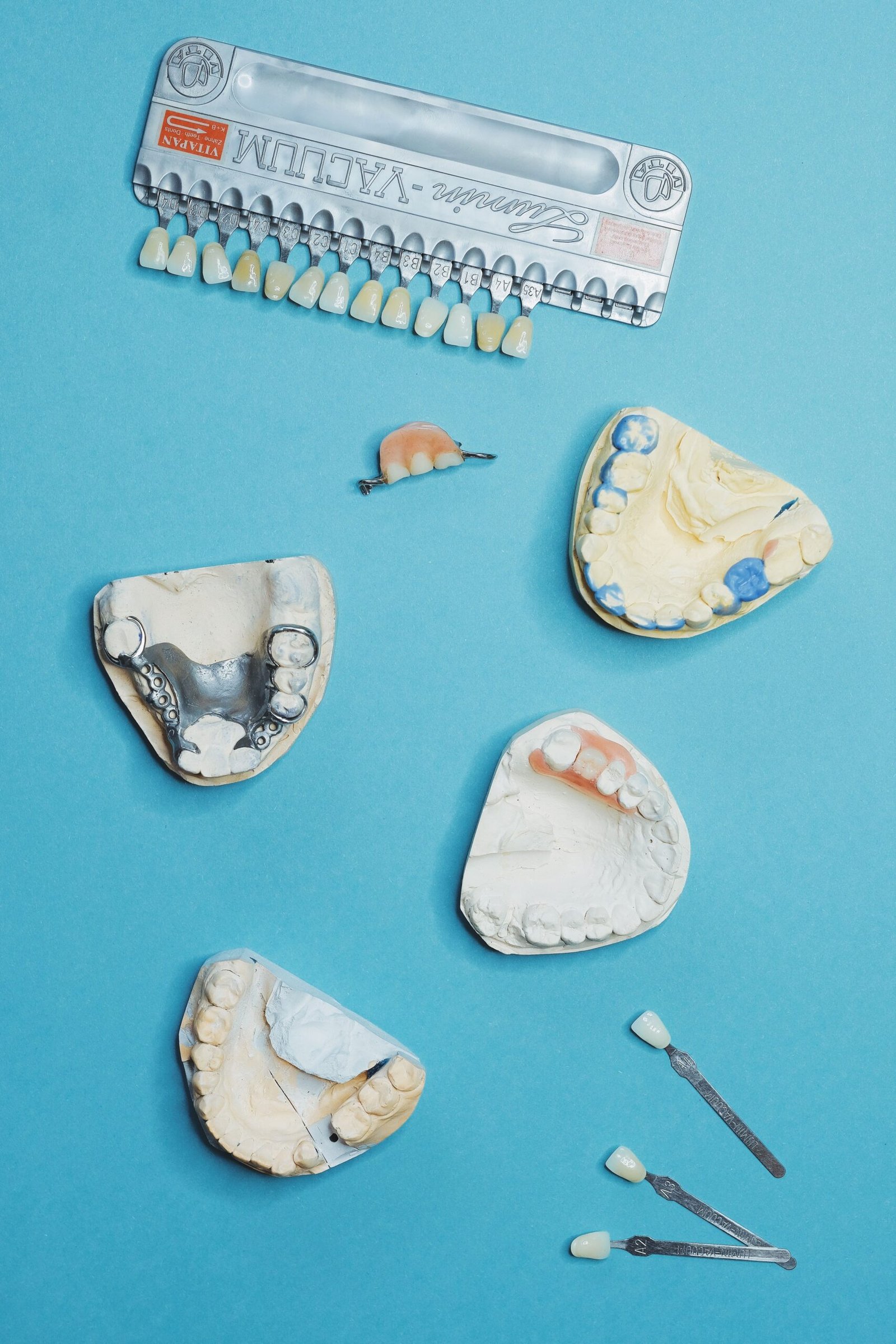
In 2018, a systematic review of 35 studies on implant-supported single crowns found 5-year survival of 98.3% for metal-ceramic crowns (4,363 crowns) and 97.6% for zirconia crowns (912 crowns). Material fractures were far less common with metal-ceramic, at 0.2% against 2.1% (p = 0.001), while veneering ceramic chipping was about the same at 2.9% and 2.8% (Pjetursson et al., Clinical Oral Implants Research, 2018).
Porcelain-fused-to-metal (PFM) crowns have a reputation as the older, cheaper, less attractive option. The evidence says something more specific. Metal-ceramic has the largest research base of any crown material, it holds up well on survival and fracture, and its documented disadvantage is appearance. About 170 people a month search “PFM crown” in Dubai, so this guide covers what the studies show, where PFM falls short, how newer materials compare, and what to ask.
Key Takeaways In a 2018 review of 35 studies, metal-ceramic implant crowns had 98.3% five-year survival and 0.2% material fractures, against 97.6% and 2.1% for zirconia, with zirconia showing fewer esthetic complications. On natural teeth, a 2015 review put metal-ceramic five-year survival at 94.7%. A Cochrane review found insufficient evidence that metal-free materials outperform metal-ceramic.
How Well Do PFM Crowns Perform?
Very well on survival. In the 2015 review of tooth-supported crowns, which covered 4,663 metal-ceramic and 9,434 all-ceramic crowns across 67 studies, metal-ceramic crowns had a 5-year survival of 94.7% (95% CI 94.1 to 96.9%). Most all-ceramic types performed similarly, so metal-ceramic was a benchmark, not an outlier (Sailer et al., Dental Materials, 2015).
The implant-supported review found even higher survival for metal-ceramic at 5 years, 98.3% (95% CI 96.8 to 99.1%), though that’s a different setting. And only 86.7% of metal-ceramic crowns (95% CI 80.7 to 91.0%, n = 1,300) were free of any biological or technical complication, which is why survival and complication-free survival should be read together (Pjetursson et al., Clinical Oral Implants Research, 2018).
[CITATION CAPSULE] A 2018 systematic review of 35 studies found implant-supported metal-ceramic crowns had 98.3% five-year survival against 97.6% for zirconia crowns, with similar chipping (2.9% and 2.8%) but significantly fewer material fractures in metal-ceramic (0.2% against 2.1%) (Pjetursson et al., Clinical Oral Implants Research, 2018).
Where Do PFM Crowns Fall Short?
Mainly on appearance. In the 2018 review, zirconia crowns had fewer esthetic complications than metal-ceramic crowns (Pjetursson et al., Clinical Oral Implants Research, 2018). The reasons aren’t spelled out in the abstract, but a metal core can show as a dark line near the gum or reduce how light passes through the crown. That explanation is general clinical knowledge, not a finding of the review.
Porcelain chipping is the other known weak point: both metal-ceramic and layered zirconia chipped at about 3% over 5 years in the implant review. The 2015 review noted all-ceramic crowns overall had higher framework fracture rates than metal-ceramic (Sailer et al., Dental Materials, 2015).
[UNIQUE INSIGHT] The common story is that PFM is the weaker, older option and zirconia the strong, modern one. The numbers invert part of it: metal-ceramic fractured less, chipped about the same, and had by far the larger evidence base. What zirconia offers is appearance, not a proven strength advantage, which matters if the crown sits at the back where nobody sees it.
Does the Evidence Show Metal-Free Crowns Are Better?
Not yet. A 2017 Cochrane review of metal-free materials for fixed restorations included 9 trials with 448 participants, with all evidence rated very low quality. For single crowns, full-contour zirconia versus cast gold (224 participants) showed no clear difference in failure at 1 year, and some evidence favored gold at 5 years, with no clear difference in complications (Poggio et al., Cochrane Database of Systematic Reviews, 2017).
The authors concluded there was insufficient evidence to support or refute metal-free materials over metal-ceramic or other standard restorations, and that clinicians should keep basing material choices on clinical experience and patient circumstances. That doesn’t make zirconia or lithium disilicate a worse choice. It means the case for them is mostly appearance and metal-free preference, not outcomes, and the zirconia crown guide covers where that evidence is stronger.
How Much Do PFM Crowns Cost in Dubai?
Generally less than newer materials on the same price list. In one Dubai clinic’s published list read in October 2026, PFM was AED 800, E-max AED 1,000, porcelain AED 1,200, and zirconia AED 1,500, though prices across clinics varied more than prices across materials did (Zavis, Dental Crown Cost in Dubai, prices read October 2026). The crown cost guide covers what drives that spread and what to ask.
Cost per tooth isn’t the whole story. A crown that fractures or chips needs repair or replacement, and the survival data above is why price should be read with it. For how long crowns can be expected to last, see how long dental crowns last.
[PERSONAL EXPERIENCE] Patients usually ask whether PFM is “outdated.” The answer that tends to settle it is where the tooth is: a molar that never shows in a smile has different priorities from a front tooth, and what matters there is fit, fracture resistance, and how much natural tooth remains.
Who Might Still Choose PFM?
People who want a well-documented option, who need a crown on a back tooth where appearance matters less, who clench or grind, or who are weighing cost. This is a reasoned summary of the evidence, not a recommendation for any individual, and it should be a conversation with your dentist about the tooth, bite, and budget.
Isn’t it better to choose a crown on its evidence for your tooth than on its reputation? For grinding specifically, the teeth grinding guide covers how bruxism relates to crowns, and the crown or veneer guide covers how much tooth each option takes.
[ORIGINAL DATA] We’re evaluating recording, in general terms, which crown materials patients in this practice choose for back teeth versus front teeth, without publishing a figure until it’s properly documented across a larger patient base.
Frequently Asked Questions
Are PFM crowns still used?
Yes. Metal-ceramic has the largest research base of any crown material, with 4,663 crowns in a 2015 review and 4,363 implant crowns in a 2018 review, and it performed well on survival and fracture.
Are PFM crowns less durable than zirconia?
Not on the evidence reviewed. In implant-supported crowns, metal-ceramic had 98.3% five-year survival against 97.6% for zirconia, and material fractures were 0.2% against 2.1%. Chipping was similar at about 3%.
Why do PFM crowns look less natural?
A 2018 review found zirconia crowns had fewer esthetic complications. The mechanism isn’t given in the abstract, but a metal core can show near the gum line or reduce light passing through the crown.
Is zirconia better than PFM?
For appearance, possibly. For outcomes, a 2017 Cochrane review found insufficient evidence for metal-free materials over metal-ceramic, with all evidence rated very low quality.
How much is a PFM crown in Dubai?
One clinic’s list in October 2026 showed PFM at AED 800 against zirconia at AED 1,500, but prices across clinics varied more than across materials. Ask for an itemized quote.
Conclusion
PFM crowns have the largest evidence base, strong survival, and fewer material fractures than zirconia in implant crowns, with appearance as the documented disadvantage. The case for metal-free materials is mainly cosmetic, and the Cochrane evidence on outcomes is very low quality.
The practical step is to ask where the tooth sits, how you bite, and what the crown’s appearance is worth to you. For the newer materials, see Zirconia Crowns: Strength, Appearance, and Drawbacks and E.max Crowns: Strength, Appearance, and When They Fit.
Sources
- Pjetursson BE, Valente NA, Strasding M, Zwahlen M, Liu S, Sailer I, A systematic review of the survival and complication rates of zirconia-ceramic and metal-ceramic single crowns, Clinical Oral Implants Research 2018;29(Suppl 16):199-214, retrieved 2026-11-03 (Tier 1, 35 studies, implant-supported crowns, abstract-level data, zirconia complication-free figure from 76 crowns)
- Sailer I, Makarov NA, Thoma DS, Zwahlen M, Pjetursson BE, All-ceramic or metal-ceramic tooth-supported fixed dental prostheses (FDPs)? A systematic review of the survival and complication rates. Part I: Single crowns (SCs), Dental Materials 2015;31(6):603-623, retrieved 2026-11-03 (Tier 1, 67 studies, tooth-supported crowns, abstract-level data)
- Poggio CE, Ercoli C, Rispoli L, Maiorana C, Esposito M, Metal-free materials for fixed prosthodontic restorations, Cochrane Database of Systematic Reviews 2017;12:CD009606, retrieved 2026-11-03 (Tier 1, 9 trials, 448 participants, very low quality evidence, abstract-level data)
- Zavis, Dental Crown Cost in Dubai: Indicative Range, prices read 14 October 2026 per the page, retrieved 2026-11-02 (Tier 4, directory aggregation, one clinic’s list cited, not a quote)
- Explanation of why metal-ceramic crowns can look less natural (dark line near the gum, reduced light transmission), retrieved 2026-11-03 (Tier 4, general clinical knowledge, not stated in the cited abstract)
- Google Ads keyword search volume for “pfm crown”, DataForSEO, retrieved 2026-11-03 (about 170 searches per month in Dubai, September 2026, competition low)