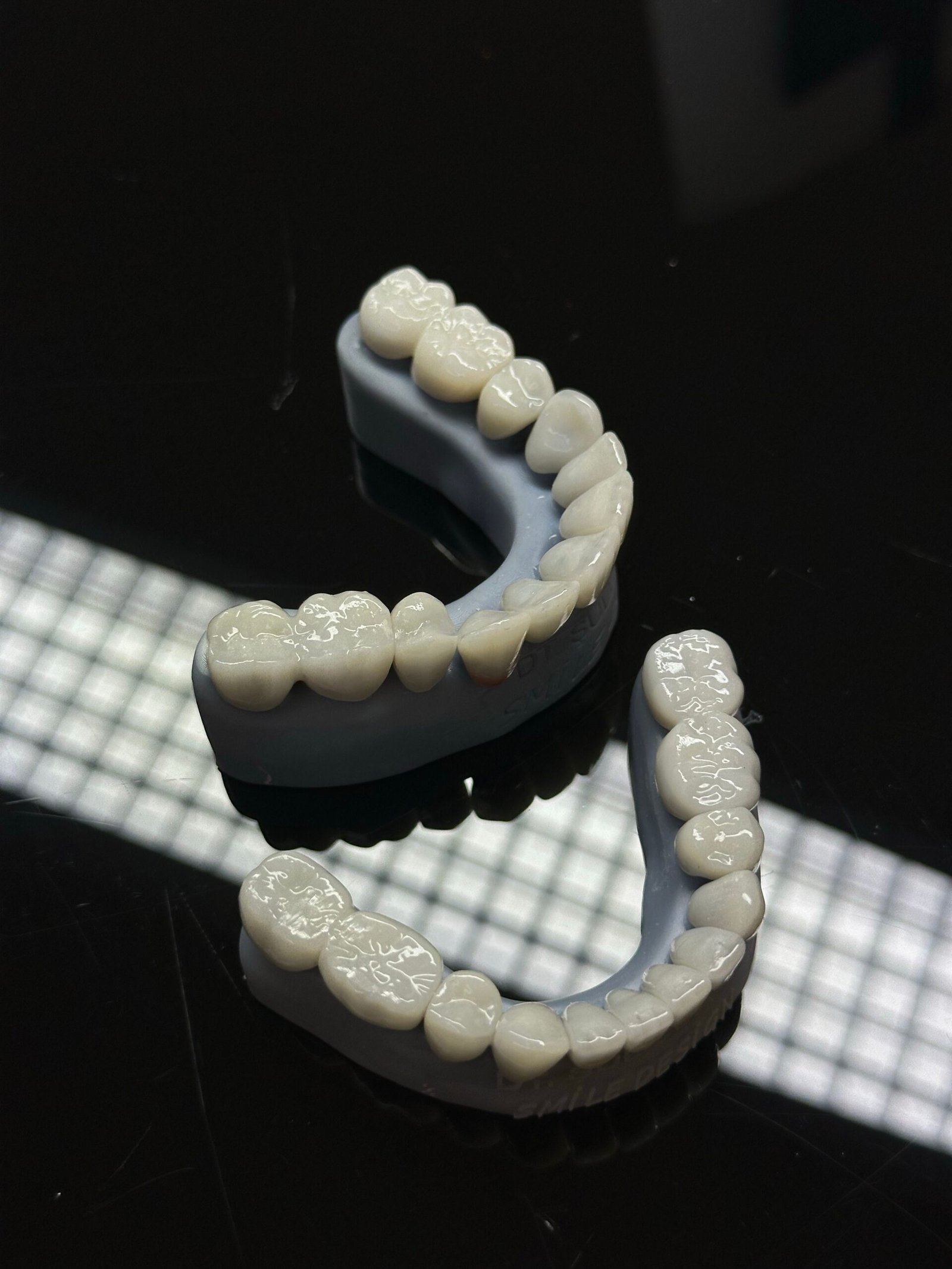
In a 2002 laboratory study of nine tooth-preparation designs, veneers removed roughly 3% to 30% of the crown of a front tooth, while full-coverage crowns removed roughly 63% to 72% (Edelhoff and Sorensen, Journal of Prosthetic Dentistry, 2002). The most invasive crown design took 4.3 times as much tooth as a facial-only veneer. Few patients are told that number when “crown or veneer” comes up.
The question usually arrives as a cost or appearance question: which looks better, which is cheaper. Tooth reduction is the quieter one, and it’s permanent. This guide covers what the measurement shows, where the study’s limits are, when a crown is still the sensible choice, and how to compare the two honestly.
Key Takeaways A 2002 lab study found veneer and resin-bonded preparations removed about 3% to 30% of coronal tooth structure, against 63% to 72% for full crowns, with the most invasive crown removing 4.3 times as much as a facial-only veneer. The teeth were resin typodont teeth and the study was anterior-only. A Cochrane review found insufficient evidence on crowns versus fillings for root-filled teeth.
How Much Tooth Does a Crown Take Compared With a Veneer?
A full crown removes far more. In the 2002 study, researchers prepared 10 resin teeth for each of nine designs: four veneer designs, two resin-bonded retainer designs, and three crown designs. They measured the coronal structure removed by weight. Veneers and resin-bonded preparations removed approximately 3% to 30%, and full crowns, both all-ceramic and metal-ceramic, removed approximately 63% to 72% (Edelhoff and Sorensen, Journal of Prosthetic Dentistry, 2002).
[CITATION CAPSULE] A 2002 laboratory study of nine anterior preparation designs, 10 preparations each, found veneer and resin-bonded designs removed approximately 3% to 30% of coronal tooth structure by weight, while full crowns removed approximately 63% to 72%. The authors concluded veneers took one-quarter to one-half the reduction of conventional complete-coverage crowns (Edelhoff and Sorensen, Journal of Prosthetic Dentistry, 2002).
Where Does the “4 Times as Much” Figure Come From?
From a comparison of single designs. The metal-ceramic crown preparation the study labeled F3 removed 4.3 times as much tooth as the facial-only veneer (V2) and 2.4 times as much as the more extensive veneer (V4) (Edelhoff and Sorensen, Journal of Prosthetic Dentistry, 2002). Working backwards from those two ratios, the extensive veneer removed roughly 1.8 times as much as the facial-only one. That last figure is derived arithmetic, not a number the study reports.
Three limits apply. The teeth were resin typodont teeth, not human teeth, so real enamel and dentin behave differently. The study covered three anterior teeth only, a central incisor, a canine, and a lower central incisor, so it says little about molars. And it dates from 2002, before modern minimal-preparation techniques became common, so current practice may remove less in both groups.
[UNIQUE INSIGHT] The most useful reading of this study isn’t the exact percentages. It’s the direction and the order of magnitude. A tooth that’s been fully prepared for a crown has lost most of its natural crown structure, and that can’t be restored. If the tooth is otherwise sound, a design that removes a fraction of that is a meaningful difference, which is why “can a veneer do this instead?” is a fair question at a consultation.
When Is a Crown Still the Better Choice?
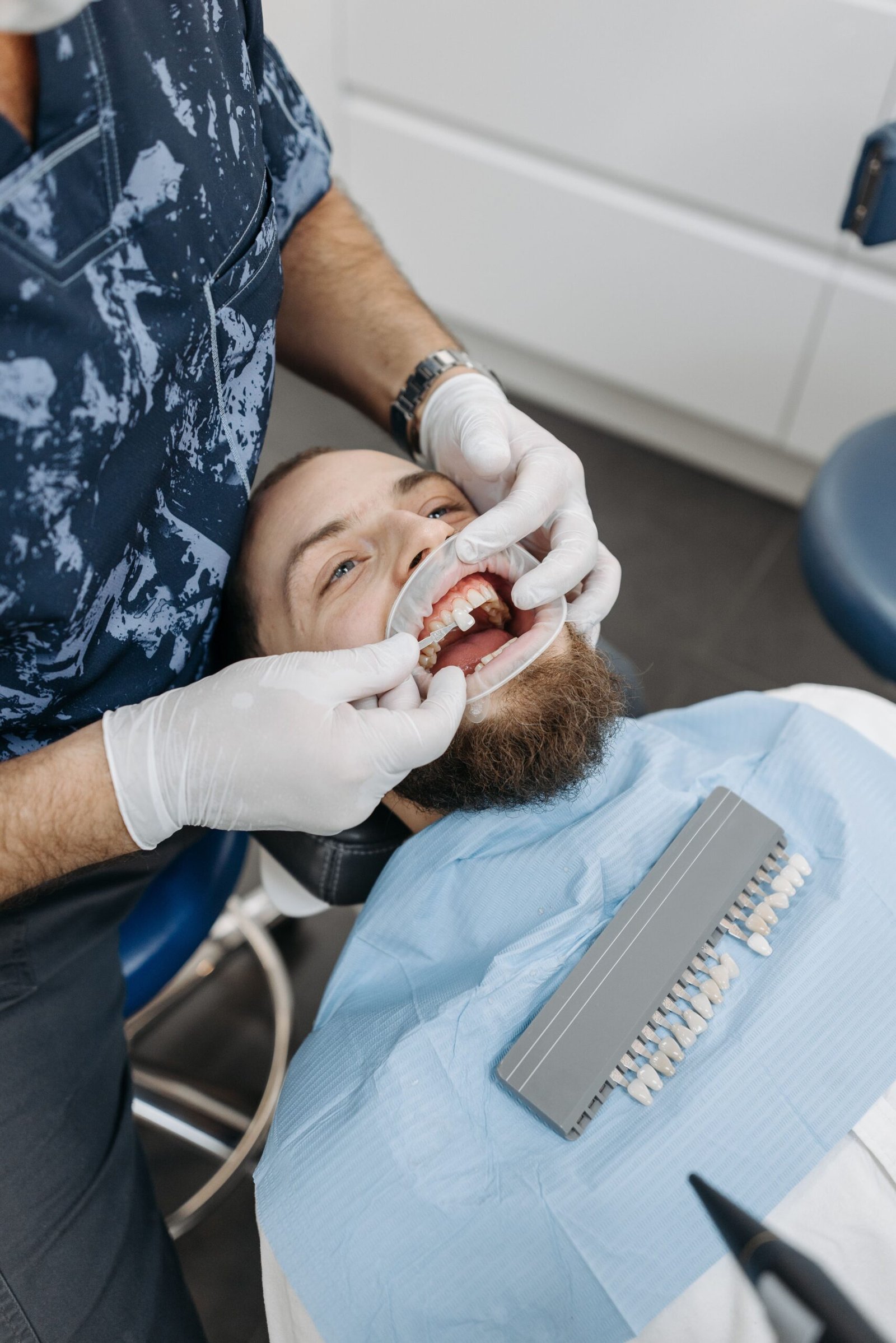
When a tooth has lost much of its structure or integrity. This is clinical reasoning, not a finding of the studies above, but it’s widely applied: teeth with large fillings, extensive decay, significant fracture, or root canal treatment often need full coverage, because a veneer bonded to a thin facial surface can’t hold a weakened tooth together. Veneers suit teeth that are largely intact and that need a change in shape, color, or alignment.
Root-filled teeth are a case where the evidence is thin. A 2015 Cochrane review looked at single crowns versus fillings for root-filled teeth and found only one trial, of 117 participants, at high risk of bias. It showed no clear difference at three years between a crown and a direct composite restoration, and the certainty was very low. The authors concluded the evidence was insufficient and that decisions should rest on clinical judgment, circumstances, and patient preference (Sequeira-Byron et al., Cochrane Database of Systematic Reviews, 2015).
[PERSONAL EXPERIENCE] The conversation that usually settles this isn’t about the material. It’s about the tooth: how much healthy structure is left, how much it’s loaded when you chew, and what the person wants to change. A tooth that only needs its shape or color corrected is a different case from one that’s heavily filled.
How Do Durability, Reversibility, and Cost Compare?
Neither is reversible in the way people hope, but they’re not equal. Preparing a tooth for any porcelain restoration removes enamel for good, which the reversibility guide covers for veneers. Crown preparation removes more, so a failed crown leaves less to work with.
On durability, the numbers come from different reviews with different follow-up. Crowns on natural teeth had 5-year survival of roughly 92% to 97% depending on material (see how long crowns last), and porcelain veneers had 10-year survival of 95.5% in a separate review (veneer longevity). Those can’t be compared directly, because the follow-up periods and designs differ.
On cost, Dubai crown listings ran roughly AED 800 to 3,500 per tooth in 2026 (crown cost guide), against AED 800 to 1,500 for a composite veneer (veneer cost breakdown), both marketing-sourced ranges. Price shouldn’t be the deciding factor when one option removes several times as much tooth.
What Should You Ask Before Choosing?
A short list covers most of it:
- How much of this tooth is healthy structure, and could a more conservative option work?
- If you recommend a crown, what is it replacing: decay, a large filling, a crack, or just color or shape?
- How much tooth will be removed, and can I see the plan on a model or scan?
- What happens if this restoration fails in 5 or 10 years?
- Is a crown being suggested for a tooth that simply needs whitening or bonding? The veneers vs. bonding guide covers a lower-reduction alternative.
Isn’t the cheapest question also the most revealing one: “what’s the least I can do to this tooth and still solve the problem?”
[ORIGINAL DATA] We’re evaluating recording, in general terms, how often a patient arrives expecting a crown and leaves with a more conservative plan, without publishing a figure until it’s properly documented across a larger patient base.
Frequently Asked Questions
Does a crown remove more tooth than a veneer?
Yes, by a wide margin in a 2002 lab study: full crowns removed about 63% to 72% of coronal structure, veneers and resin-bonded designs about 3% to 30%. The most invasive crown removed 4.3 times as much as a facial-only veneer.
How much of the tooth is shaved down for a crown?
Roughly two-thirds of the crown of a front tooth in a resin-tooth study (63% to 72%). Real teeth, molars, and newer techniques may differ, so ask to see the plan for your tooth.
Can I get a veneer instead of a crown?
Sometimes, if the tooth is largely intact and the problem is shape, color, or alignment. A tooth with large fillings, extensive decay, a significant fracture, or root canal treatment often needs full coverage. That’s clinical judgment, not a single study result.
Do I need a crown after a root canal?
The evidence is unclear. A 2015 Cochrane review found only one trial of 117 participants, at high risk of bias, with no clear difference at three years between a crown and a direct composite restoration, and concluded the evidence was insufficient.
Which lasts longer, a crown or a veneer?
The reviews can’t answer directly. Crowns had 5-year survival of roughly 92% to 97% on natural teeth, and porcelain veneers 95.5% at 10 years in a different review, with different designs and follow-up.
Conclusion
A full crown removes most of the natural crown of a tooth, a veneer a fraction of it, and that difference is permanent. The study behind that finding is small and old, and it used resin teeth, but its direction is unambiguous.
The practical step is to ask what the restoration is replacing and whether a more conservative option solves the same problem. For the veneer side of that decision, see Veneers in Dubai: The Complete Patient Guide, and for the material side of crowns, Zirconia Crowns: Strength, Appearance, and Drawbacks.
Sources
- Edelhoff D, Sorensen JA, Tooth structure removal associated with various preparation designs for anterior teeth, Journal of Prosthetic Dentistry 2002;87(5):503-509, retrieved 2026-11-02 (Tier 2, laboratory study on resin typodont teeth, 10 preparations per design, anterior teeth only, abstract-level data; the 1.8x extensive-veneer figure is derived from the reported 4.3x and 2.4x ratios)
- Sequeira-Byron P, Fedorowicz Z, Carter B, Nasser M, Alrowaili EF, Single crowns versus conventional fillings for the restoration of root-filled teeth, Cochrane Database of Systematic Reviews 2015;9:CD009109, retrieved 2026-11-02 (Tier 1, 1 trial, 117 participants, high risk of bias, very low certainty, abstract-level data)
- Sailer I, Makarov NA, Thoma DS, Zwahlen M, Pjetursson BE, All-ceramic or metal-ceramic tooth-supported fixed dental prostheses (FDPs)? Part I: Single crowns, Dental Materials 2015;31(6):603-623, cross-referenced from this site’s How Long Do Dental Crowns Last guide, retrieved 2026-11-02 (Tier 1)
- Cross-referenced veneer survival (95.5% at 10 years, Alenezi et al., Journal of Clinical Medicine 2021) and veneer pricing from this site’s veneer guides, and Dubai crown pricing from this site’s Dental Crown Cost guide, retrieved 2026-11-02 (Tier 1 and Tier 4)
- Clinical reasoning on when full coverage is needed (large fillings, extensive decay, fracture, root-filled teeth), retrieved 2026-11-02 (Tier 4, general clinical practice, not a finding of the cited studies)